Can You Study Psychology Without a Psychology Background?
It’s never a loud question.
It doesn’t announce itself in meetings.
It doesn’t trend on LinkedIn.
It sits quietly, somewhere between curiosity and caution.
You find yourself thinking about psychology not academically at first, but practically. In how people behave. In why certain conversations drain you, and others don’t. In why you keep being the one people open up to, even when you didn’t ask to be.
And then the doubt arrives, politely but firmly.
I didn’t study psychology.
I don’t have a counseling background.
Am I even allowed to start now?
In Kenya, this doubt is familiar. We are raised on straight lines. School leads to a degree. A degree leads to a profession. And once you choose a lane, you’re expected to stay in it quietly, consistently, without too much curiosity spilling over the edges.
So when psychology shows up later through work, leadership, caregiving, ministry, HR, teaching, or personal growth, it can feel like you arrived late to a room where everyone else already knows the language.
But psychology doesn’t belong only in classrooms. It belongs to people, and most people meet it in life first.
So let’s answer the question plainly, without hype and without intimidation.
Yes, you can study psychology without a background in psychology. But how you begin matters more than when you begin.
Why This Question Keeps Coming Up
This question rarely comes from fear of learning. It comes from respect.
You don’t want to enter a field that:
- Deals with human vulnerability carelessly.
- You don’t want to waste money on a counselling course in Kenya that assumes knowledge you don’t have.
- You don’t want to sit in a room feeling like you’re constantly catching up, pretending you understand when you don’t.
For many Kenyans, especially working professionals, interest in counselling psychology grows quietly over time. It grows through managing teams under pressure. Through serving in the church. Through teaching. Through HR work that goes far beyond contracts and policies. Through parenting, caregiving, or simply being the dependable listener in your circle.
By the time you start looking up “Can I study psychology without a psychology background?” you’re not testing an idea. You’re responding to something that’s been forming for a while.
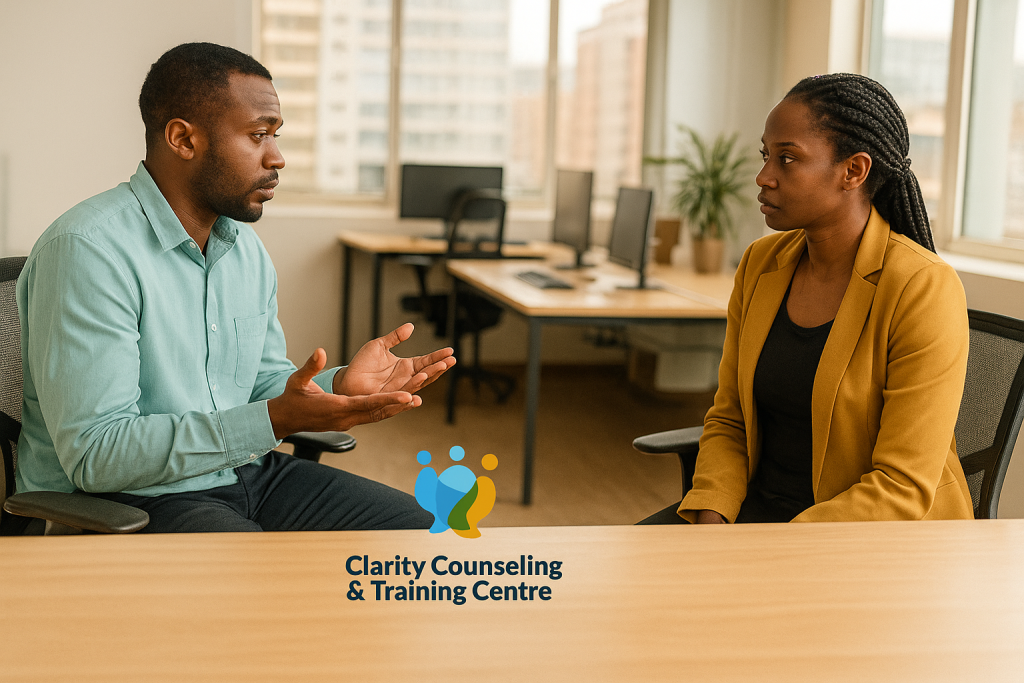
Psychology Isn’t Only for “Psychology People”
Here’s the part that’s often left unsaid.
Many people who go on to study counselling psychology did not begin there. They didn’t come armed with theory or academic language. They came with lived experience. With years of listening, mediating, supporting, leading, and absorbing other people’s emotions, without having the tools to process them properly. It’s true for:
- Teachers.
- HR professionals.
- Managers.
- Pastors and ministry leaders.
- Healthcare workers.
- NGO staff.
- Parents who have learned more about emotional regulation at home than any textbook could teach.
Psychology, especially counselling psychology, does not punish this kind of experience. When training is done well, it builds on itself. Because Counseling is not about sounding clever, but understanding human behaviour, emotional processes, boundaries, and ethics, and learning how to respond without harm.
Those are not inherited skills. They are learned. Slowly. Carefully. With guidance.
The Real Question Isn’t Background — It’s Foundation
When people ask whether they can study psychology without a psychology background, what they’re often asking is something softer and more honest.
- Will I cope?
- Will I understand?
- Will I feel out of place?
The answer depends less on what you studied before and more on whether the programme you choose is designed to build foundations, not assume them.
A solid certificate in counselling psychology does not rush. It does not shame gaps. It explains terms before using them. It layers ideas gently, allowing understanding to deepen rather than overwhelm.
Psychology is not something you cram; it’s something you integrate. You’re not just learning about people, you’re learning how to:
- Notice
- Reflect
- Hold complexity without rushing to fix it
That takes time. And the right learning environment.
Why People Without a Psychology Background Often Thrive
There’s a quiet irony here.
People who come into counseling psychology without a formal background often do surprisingly well. Not because they know more, but because they:
- Assume less.
- Listen more carefully.
- Ask questions without trying to impress.
- Connect theory to real-world situations rather than treating it as abstract information.
- Learn with humility rather than performance.
Counselling psychology responds well to that posture. Because at its core, this field is not about having answers ready. It’s about:
- Learning how to sit with uncertainty
- Respond ethically
- Understand behaviour within context (cultural, emotional, relational)
Something many Kenyans already do informally every day.

Why Counselling Psychology Is a Grounded Entry Point
If you’re coming from a non-psychology background, counselling psychology is often a more accessible and meaningful place to begin than purely academic psychology.
It bridges theory and real life, focuses on relationships, emotional processes, and behaviour. It emphasises ethics, self-awareness, and boundaries, not just information.
You’re not being trained to diagnose. You’re being trained to understand, to respond responsibly, and to recognise where your role begins and ends.
For many professionals searching for a counselling course in Kenya, this balance matters. You want depth, but you also want relevance. You want structure, but you don’t want to feel swallowed by theory that never touches real life.
A Quiet Reality in Kenyan Workspaces
There’s another layer to this conversation that rarely gets named.
Across Kenyan workplaces, emotional labour is already happening, often without training, supervision, or support.
- Managers are holding teams together under pressure.
- HR professionals are absorbing distress.
- Teachers are regulating overwhelmed classrooms.
- Church leaders are counseling congregants without formal grounding.
The demand for psychological skills already exists. What’s often missing is structured, ethical training that protects both the helper and the person being helped.
This is why interest in studying psychology later in life is not a detour. It’s a response to reality.
From Curiosity to Clarity
Interest in psychology often starts softly. With a book. A season of self-reflection. A role that stretches you emotionally. A sense that you want to work with people more intentionally and more responsibly.
But curiosity alone can only take you so far.
At some point, growth needs structure. It needs ethical grounding. It needs supervision. It needs language for what you’re already sensing but haven’t yet named.
That’s where formal training becomes less about qualification and more about clarity.
Where the Certificate in Counselling Psychology Fits
The Certificate in Counselling Psychology at Clarity Counselling & Training Centre was designed with this exact journey in mind.
It does not assume a background in psychology.
It does not rush foundations.
It does not separate theory from lived experience.
Instead, it introduces core psychological concepts clearly, builds emotional intelligence and self-awareness, grounds learning in ethics and boundaries, and creates space for personal and professional growth — without pressure to perform.
Many students begin unsure. Curious. Slightly intimidated.
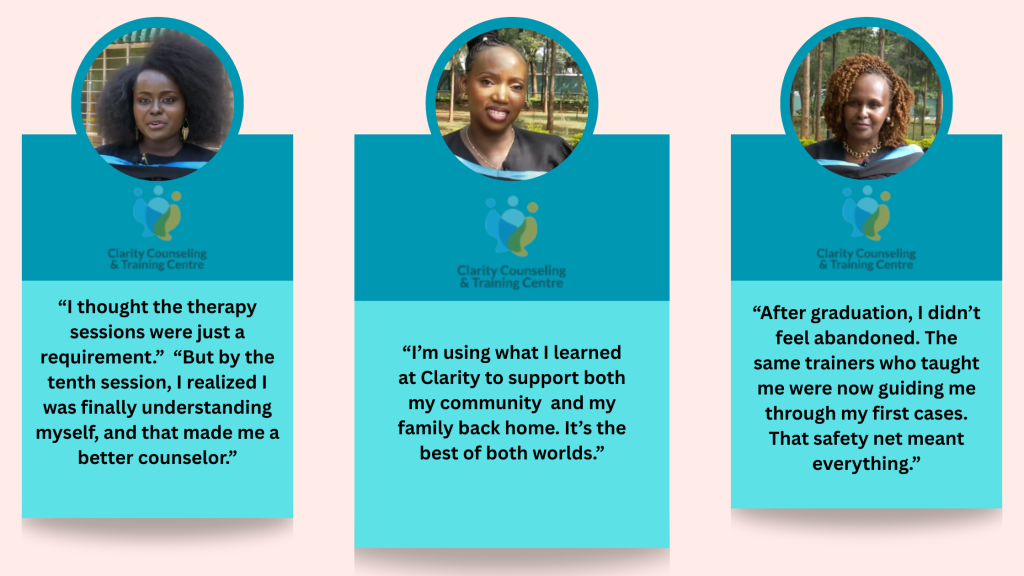
Most leave clearer. About psychology, yes, but also about themselves, their boundaries, and how they want to show up in spaces where people are vulnerable.
The learning is layered.
The pace is humane.
Nothing is forced.
So, Can You Study Psychology Without a Psychology Background?
Yes.
And often, those who start without one bring exactly what the field needs: curiosity, humility, lived experience, and care.
You don’t need to have started earlier.
You don’t need to have taken a straight path.
You don’t need to have everything figured out.
You just need a place where learning is held well.
If this question has been following you quietly —through work, through conversations, through moments where you realize you’re already holding more than you were trained for— then it deserves a thoughtful answer, not a hurried one.
You don’t need to prove readiness.
You don’t need to have taken a straight academic path.
You only need a place where learning is paced, ethical, and grounded in real human experience.
The Certificate in Counselling Psychology at Clarity Counselling & Training Centre exists for exactly this kind of beginning. It’s designed for you who is curious, thoughtful, and ready to learn, even if psychology was not where you started.
No pressure.
No performance. Just a steady, well-held first step into understanding people and yourself more clearly.
Frequently Asked Questions
Can you study psychology without a psychology background?
Yes. Many people begin studying psychology without having taken it at university. What matters most is whether the programme lays clear foundations, explains concepts from the ground up, and supports learners new to the field.
Is counselling psychology suitable for beginners?
Yes. Counselling psychology is often one of the most accessible entry points into psychology because it connects theory to real-life human experience. It focuses on self-awareness, ethics, emotional processes, and relationships rather than abstract theory alone.
Who typically studies counselling psychology in Kenya?
In Kenya, people who study counselling psychology often come from diverse backgrounds — including education, HR, healthcare, ministry, NGO work, community leadership, and corporate roles. Many are already working closely with people and want ethical, structured training.
Do you need a degree to study counselling psychology?
Not always. Introductory certificates in counselling psychology are designed to accommodate learners without prior degrees in psychology. These programmes focus on foundational knowledge, personal development, and responsible practice rather than academic specialisation.
What is the Certificate in Counselling Psychology at Clarity Counselling & Training Centre?
It is a foundational training programme designed for individuals who want to understand psychology and counselling in a grounded, ethical, and practical way — even if psychology was not their original field of study.