Does SHA Cover Therapy? Complete 2026 Guide to Insurance, Costs, and Affordable Therapy in Kenya
You have already made the hard decision.
You have admitted, maybe for the first time, that you cannot keep going like this. The sleeplessness. The anxiety. The arguments. The grief that will not lift. You have decided to see a therapist.
And then you opened a browser and typed: “How much does therapy cost in Kenya?”
Now you are stuck. The numbers are all over the place. KSh 2,000 here. KSh 8,000 there. Some places do not list prices at all. Your medical cover is now SHA, not NHIF, and nobody seems to be sure whether it covers therapy or not. You are wondering if this is going to cost you a month of rent.
Take a breath. We are going to break this down properly.
This is the 2026 guide to what therapy actually costs in Kenya, what SHA covers, which private insurers pay for counselling, and where to find help when money is tight. No vague promises. Just the numbers and the options.
Does SHA Cover Therapy in Kenya?
Yes. Mental health care is included in the Social Health Authority benefits package, and access to therapy in Kenya has widened significantly because of it. But what that means in practice needs unpacking.
SHA replaced NHIF on 1 October 2024 under the Social Health Insurance Act of 2023. The new system splits funding into three pools: the Primary Healthcare Fund (PHF), the Social Health Insurance Fund (SHIF), and the Emergency, Chronic and Critical Illness Fund (ECCIF).
Mental health sits across these funds in three ways:
1. Primary Healthcare Fund (PHF) — the entry point
At Level 2 and Level 3 facilities (dispensaries, health centres, sub-county hospitals), the Kenya Gazette tariffs under the Social Health Insurance Act list “mental health education, counselling and psychosocial support services” as part of the basic primary care package. This is funded directly by the government, not by your contribution. Once you are registered with SHA, you can access these services without paying out of pocket at the point of care.
What this looks like in real life: a counsellor or trained health worker at your nearest health centre can provide initial screening, brief counselling, and psychosocial support. For mild to moderate distress, this is often enough to get you stabilised.
2. Social Health Insurance Fund (SHIF) — for higher-level care
When you need care at Level 4, 5, or 6 facilities (county hospitals, referral hospitals, teaching hospitals), SHIF kicks in. This is funded by member contributions: 2.75% of gross salary for the employed, and means-tested contributions starting at KSh 300 a month for the self-employed. Outpatient mental health consultations and inpatient psychiatric services at empanelled facilities are covered under this package. You can check progress and registration details on the Ministry of Health SHA implementation page.
In October 2025, the Ministry of Health formally announced that mental health services are included in the Taifa Care Model under SHA, with the goal of making treatment accessible through both public and accredited private facilities.
3. Emergency, Chronic and Critical Illness Fund (ECCIF) — for severe and chronic conditions
For chronic mental health conditions that require ongoing management, ECCIF provides cover beyond the SHIF cap. This is tax-funded and is meant to remove the old NHIF cap-and-top-up problem, where patients ran out of cover mid-treatment.
What SHA Does Not Cover (Be Honest With Yourself About This)
Here is the truth most articles will not tell you. SHA covers mental health care primarily through public and empanelled facilities. If you want to see a therapist in private practice who is not on the SHA panel, your SHA card will not pay for that session.
That does not mean SHA is useless. It means you have a choice to make: use SHA-empanelled facilities for free or low-cost care, or pay out of pocket (or use private insurance) for a private therapist of your choice. Affordable, confidential counselling in Kenya is now within reach through more routes than most Kenyans realise.
Both are valid. The next sections will help you work out which makes sense for you.
How Much Does Therapy Cost in Kenya in 2026?
[IMAGE PROMPT: A close-up of a Kenyan therapy session: two pairs of hands across a low table, one holding a tissue, the other resting open. Warm wooden floor, soft natural light. The therapist is not visible above the shoulders. Intimate, professional.]
Here is the honest range across Nairobi and most major Kenyan towns in 2026:
- Public hospitals and county facilities (with SHA): KSh 0 to KSh 500 per session
- NGO and community-based counsellors: KSh 500 to KSh 1,500 per session
- University-affiliated training clinics (interns supervised by licensed psychologists): KSh 1,000 to KSh 2,500 per session
- Mid-range private practitioners (KCPA-registered, established): KSh 3,000 to KSh 5,000 per session
- High-end private psychologists and psychiatrists (specialised, expat-facing): KSh 6,000 to KSh 15,000 per session
At Clarity Counselling, individual therapy sessions are KSh 3,500. We sit deliberately in the mid-range: low enough to be accessible to working Kenyans, high enough to retain experienced, KCPA-licensed counselling psychologists.
Why the Range Is So Wide
Three things drive the cost of a therapy session in Kenya:
- The therapist’s qualifications and experience. A psychiatrist (medical doctor) charges more than a counselling psychologist registered with the Kenya Counselling and Psychological Association. A counselling psychologist with 15 years of experience charges more than a fresh graduate.
- The location and overheads. A Westlands office costs more to run than a clinic in Kasarani. That cost is reflected in the session fee.
- The specialty. Trauma-focused therapy, EMDR, couples therapy, and child psychology often cost more than general individual counselling because they require additional certifications.
How Many Sessions Will You Actually Need?
This is the real question, because session count multiplied by session cost is your true investment.
For mild to moderate concerns (work stress, mild anxiety, life transitions), most clients see meaningful change in 6 to 10 sessions. At Clarity, that is roughly KSh 21,000 to KSh 35,000 over two to three months. If you want to know what the first 6 sessions of therapy in Kenya actually look like, we have written a session-by-session guide.
For more complex concerns (depression, trauma, grief, relationship breakdown), 12 to 20 sessions is more realistic. That is KSh 42,000 to KSh 70,000 over four to six months.
Compared to what untreated mental health costs you in lost productivity, broken relationships, sick days, and self-medication, this is one of the better investments you will ever make. We have written about this in detail here: Is Therapy Worth the Cost? A Breakdown for Kenyan Professionals.

Which Private Insurance Companies Cover Counselling in Kenya?
Private medical insurance is now the most common way Kenyans access private therapy in Nairobi. The good news is that mental health coverage has improved significantly across most Kenyan insurers in the last three years, partly driven by the Kenya Mental Health Act of 2023 and corporate wellness pressure.
Insurers that typically include outpatient mental health benefits in their plans include:
- AAR Insurance
- APA Insurance
- Britam
- CIC Insurance
- Fidelity Insurance
- Heritage Insurance
- ICEA LION
- Jubilee Health
- KCB Insurance
- Madison Insurance
- Old Mutual / UAP
- Sanlam
Coverage varies wildly by plan, though. Some cover the full session fee. Some cover up to a session limit (commonly 8 to 12 sessions per year). Some require a referral from a GP. Some only cover psychiatry, not counselling psychology. A few still exclude mental health entirely on lower-tier plans.
Clarity Counselling is empanelled with a number of these providers. The fastest way to confirm whether your specific plan covers your session is to call us directly on +254 114 444 300 with your insurance card in hand. We will check it for you before you book, so you are not surprised afterward.
Five Questions to Ask Your Insurer Before You Book
- Does my plan cover outpatient mental health and counselling?
- How many sessions per year are covered?
- Do I need a referral from a GP or psychiatrist first?
- Is Clarity Counselling on your panel of approved providers?
- What is the per-session limit, and will I need to top up?
If you are still unsure which therapist fits your needs once your cover is confirmed, our guide to how to choose the right therapist in Kenya walks you through the decision. You can also book a free 15-minute consultation so we can match you before you commit.
Are There Free Therapy Options in Kenya?
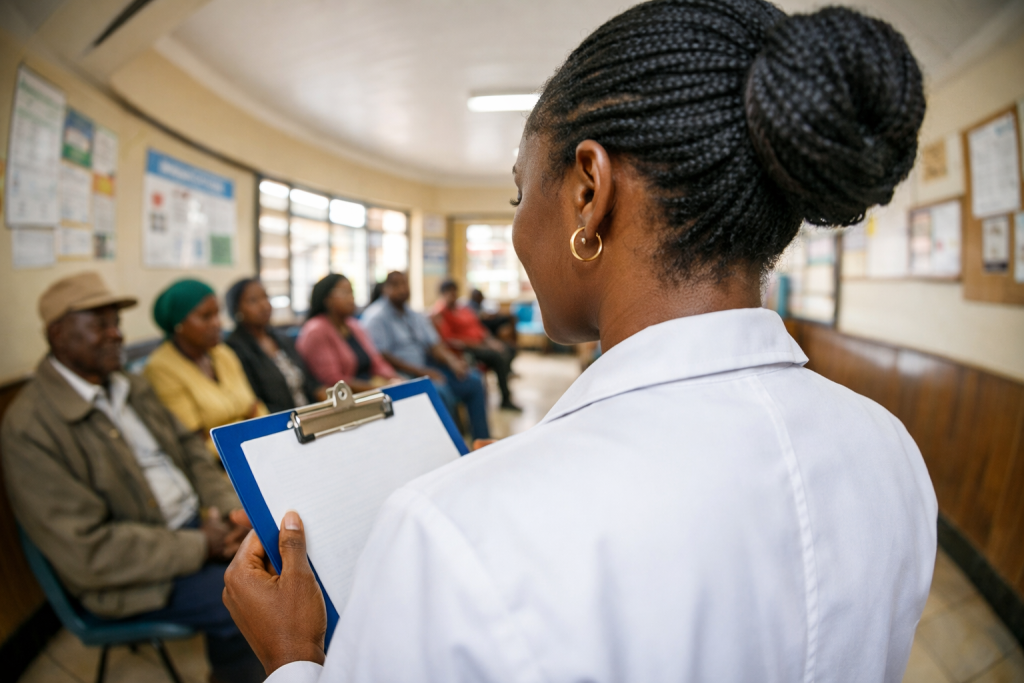
[IMAGE PROMPT: A wide shot of a community health centre waiting area in Nairobi, Kenyan adults of mixed ages seated calmly, a counsellor walking toward them with a clipboard. Calm, professional, dignified. Not crowded, not chaotic.]
Yes. If you cannot afford private therapy and are not yet enrolled or contributing fully to SHA, free and low-cost options exist. They are not always quick to access, but they are real.
Public Mental Health Services
- Mathari National Teaching and Referral Hospital — outpatient psychiatric clinic in Nairobi. Subsidised under SHA.
- Kenyatta National Hospital — Department of Mental Health, including the Gender-Based Violence Recovery Centre for trauma survivors.
- County referral hospitals — most counties now have at least one psychiatric outpatient clinic.
- Sub-county and Level 3 facilities — for primary care counselling and psychosocial support, fully covered under SHA’s Primary Healthcare Fund.
Crisis and Helpline Support
- Befrienders Kenya: +254 722 178 177 — confidential emotional support and suicide prevention.
- Niskize: 0900 620 800 — 24/7 mental health and psychosocial support helpline.
- Mental Health Kenya: 0800 720 002 — toll-free advisory and referral line.
NGO and Community Counselling
Several Kenyan NGOs offer free or sliding-scale counselling for specific groups: GBV survivors, refugees, adolescents, people living with HIV, and the urban poor. Examples include the Gender Violence Recovery Centre at Nairobi Women’s Hospital, Coalition on Violence Against Women (COVAW), and various Kenya Red Cross psychosocial programmes after disasters or accidents.
University training clinics also offer low-cost counselling delivered by supervised interns at institutions like USIU-Africa, Daystar, Kenyatta University, and Catholic University.

How to Make Therapy Affordable When You Are Paying Out of Pocket
If your insurance does not cover therapy, your SHA does not extend to the therapist you want, and free options have a six-week waiting list, you may end up paying out of pocket. If you are still unsure whether you even need professional support, our guide on signs you are ready for professional therapy in Kenya is a good place to start. There are still ways to make this work.
- Ask about sliding scale fees. Many KCPA-registered therapists, including some at Clarity, have a limited number of reduced-fee slots reserved for clients who need them. You will not see this advertised. You have to ask.
- Book a package, not a single session. Some practices offer a small discount on a 6 or 10-session prepaid package. This also commits you, which therapy outcomes research consistently shows improves results.
- Choose flexible online therapy in Kenya. Online sessions often cost slightly less because the practitioner has lower overheads. They are also faster to book and easier to fit around work.
- Use bi-weekly sessions instead of weekly. For non-acute concerns, going every two weeks halves your monthly cost while still maintaining therapeutic momentum.
- Use your employer’s Employee Assistance Programme (EAP). If you work for a corporate, NGO, or government body, you may already have free counselling sessions through an EAP that you have never used. Ask HR. Discreetly.
What If I Am the HR Manager Reading This?
You are probably thinking about staff wellbeing, sick leave costs, and the rising mental health conversation in Kenyan workplaces. Adding mental health coverage to your medical scheme — and exploring corporate wellness and EAP partnerships — is one of the highest-ROI things you can do for staff retention and productivity.
Clarity Counselling partners with Kenyan companies and NGOs to provide:
- Subsidised individual therapy for staff and dependants
- Mental health training for managers and NGO staff on identifying and supporting struggling team members
- Corporate wellness talks and post-incident debriefs
- Critical incident response after staff loss, retrenchment, or trauma
Get in touch on +254 114 444 300 to discuss a corporate package.
What Therapy at Clarity Looks Like
Clarity Counselling and Training Centre is a KCPA-accredited counselling centre in Nairobi (No. KCPA/INST/0147/019), Counsellors and Psychologists Board-registered under the Counsellors and Psychologists Act, 2014.
We offer:
- Individual, couples, and family therapy in Kenya for depression, anxiety, trauma, grief, and life transitions
- Couples and pre-marital therapy
- Child and teenage therapy in Kenya
- Online therapy in Kenya and the diaspora
- Corporate wellness and EAP services
Sessions are KSh 3,500. Insurance accepted from most major Kenyan insurers. In-person at Utalii House, 3rd Floor, North Wing, Nairobi, and online.
Stop Letting the Cost Question Be the Reason You Stay Stuck
You are not weak for being worried about money. You are realistic.
But the longer the question of cost stops you from booking that first session, the longer the thing that brought you here gets to keep running your life. The depression. The anxiety. The grief. The arguments. The sleepless nights.
You do not have to figure out the whole financial picture today. You just have to make one phone call and let us help you work out what is covered and what your real, out-of-pocket cost will be. Book a confidential session with Clarity Counselling — we will check your insurance, walk you through the options, and help you decide what is sustainable for you.
Call us: +254 114 444 300
Or visit: claritycounseling.co.ke/contact-us