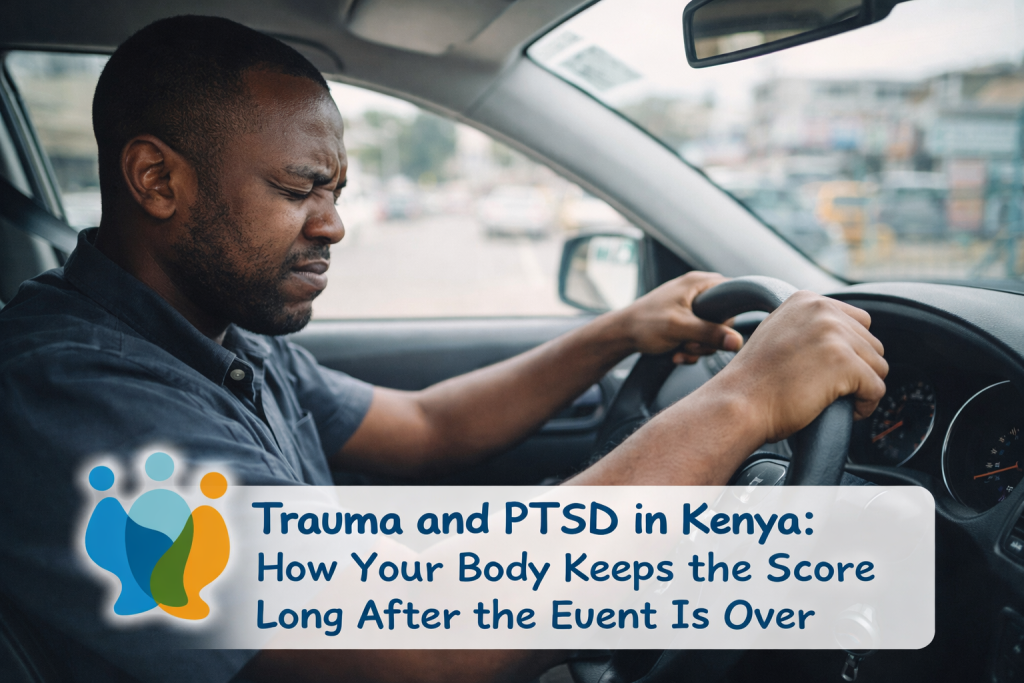
Trauma and PTSD in Kenya: How Your Body Keeps the Score Long After the Event Is Over
It has been three years.
You drive past the junction where it happened. The matatu came out of nowhere. Glass everywhere. The sound of metal folding in on itself. You walked away. Your friend did not.
You tell yourself you are fine. You went back to work. You stopped going to therapy after two sessions because everyone said you were lucky to be alive. And you are. You know you are.
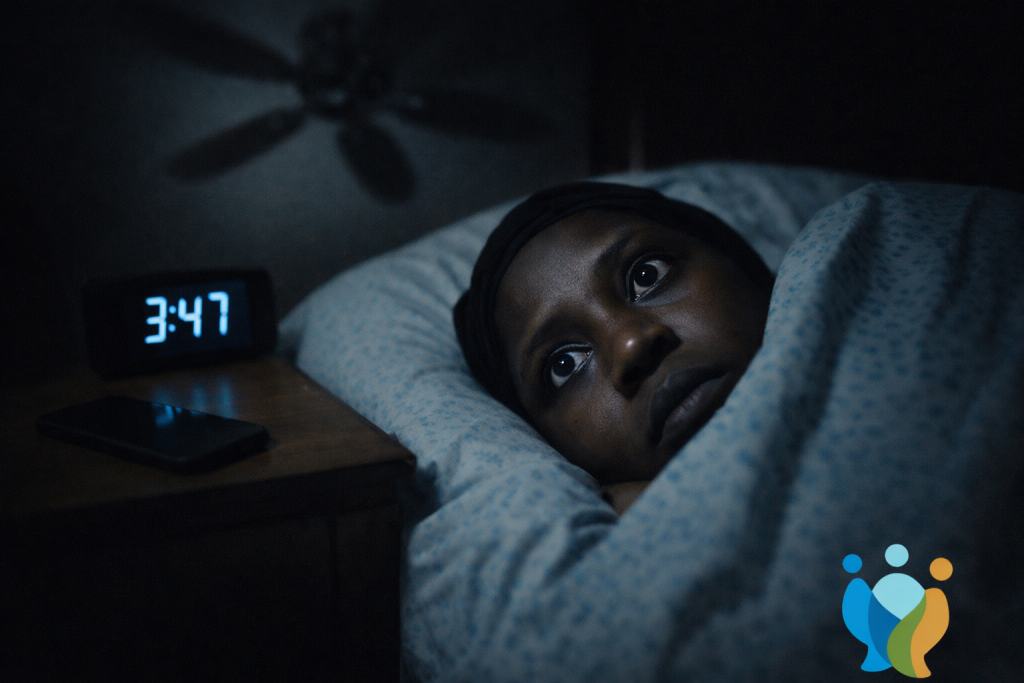
But your hands are shaking right now. Your chest is tight. You cannot remember the last time you slept through the night without waking at 3am, heart racing. Loud bangs make you flinch. You do not drive on that road anymore. You take the long way around.
You have started to wonder if something is wrong with you.
Nothing is wrong with you. Your body is doing exactly what bodies do after they have lived through something they were never designed to survive. It is called post-traumatic stress, and in Kenya, it is far more common, and far less talked about, than almost any other mental health issue.
How Common Is Trauma and PTSD in Kenya?
More common than most Kenyans realise. If any of the pattern above feels familiar, it is worth talking to a trauma-informed counsellor in Kenya. The data we do have is sobering.
A landmark 2025 study by the Aga Khan University Brain and Mind Institute (GPAA study) found that more than half of the Kenyan adults sampled showed probable signs of PTSD. The study also revealed striking variation across Nairobi: Westlands Subcounty reported a past-month PTSD symptom prevalence of 48 percent, while Kibra reported 17 percent.
A separate household survey published in the International Journal of Environmental Research and Public Health (Jenkins et al.) found that 48 percent of adults in a rural Kenyan population had experienced a severe trauma, and 10.6 percent had probable PTSD in the past week alone.
Among adolescents in Nairobi’s informal settlements, the prevalence of PTSD has been measured at 12.2 percent (Friedberg et al., PLOS ONE), with sexual violence identified as one of the strongest drivers.
And among Kenyan secondary school students, one study found a one-year PTSD prevalence as high as 34.5 percent.
Three numbers to anchor in your mind. One in two adults exposed to severe trauma. Roughly one in ten with active PTSD symptoms. And in some Nairobi sub-counties, nearly half the population carrying past-month symptoms. If you recognise yourself in these numbers, signs you are ready for professional therapy is worth a read.
This is not a fringe condition. This is a public health reality that nobody is talking about.
What Counts as Trauma?
In clinical terms, trauma is what happens to the body and brain after exposure to actual or threatened death, serious injury, or sexual violence. It can happen to you directly. It can happen by witnessing it. It can happen by learning that something terrible happened to someone you love. It can happen through repeated exposure to disturbing details, which is why first responders, journalists, and healthcare workers are so vulnerable.
In Kenya specifically, the most common trauma exposures we see at Clarity include:
Road Traffic Accidents
Kenya recorded over 4,400 road deaths in 2025 (The Standard), a 3.4 percent increase on 2024, with more than 21,000 total crash victims recorded by the National Transport and Safety Authority. Pedestrians accounted for 1,685 of those deaths. For every fatality, several survivors and bereaved family members carry the psychological aftermath. Almost no one offers them therapy as part of the discharge process — and does SHA cover therapy in Kenya is a question most trauma survivors never get answered.
Gender-Based Violence (GBV)
Kenya has documented some of the highest rates of GBV in East Africa. In informal settlements, between 8 and 25 percent of female adolescents experience sexual assault each year. The mental health consequences are severe and well-documented: rates of depression, anxiety, and PTSD are dramatically higher among GBV survivors than the general population, and research from Kenyatta National Hospital on PTSD in sexually abused children shows how this trauma compounds when survivors are also young, disabled, displaced, or living in poverty.
Political and Community Violence
Kenya carries the long aftermath of post-election violence in 2007/8, periodic ethnic clashes, terror attacks (Westgate in 2013, Garissa University in 2015, DusitD2 in 2019), and the 2024 Gen Z protests. Studies of Kenyan school children during the 2007 election period found elevated PTSD rates that persisted years later.
Childhood Abuse and Adverse Childhood Experiences
Sexual abuse, physical abuse, severe neglect, witnessing domestic violence, growing up with a parent struggling with addiction or untreated mental illness — these all create what trauma specialists call “developmental trauma,” and they shape the adult nervous system in ways most Kenyans never get the chance to understand or heal. Where the impact surfaces in younger survivors, child and teenage therapy in Kenya is often the right starting point.
Medical Trauma, Bereavement, and Birth Trauma
A difficult diagnosis. A loved one’s sudden death. A traumatic delivery in a Kenyan public hospital. A miscarriage that was treated as routine. These are quiet traumas. Few people will validate them. They lodge in the body all the same — and grief and loss therapy in Kenya can help untangle what trauma and grief are doing in tandem.
Can Trauma Cause Physical Illness?
Yes. This is one of the most important things to understand about trauma, and one of the most under-discussed in Kenyan medicine. Decades of research, popularised in Bessel van der Kolk’s The Body Keeps the Score, have shown that traumatic stress is stored in the body, not just the mind. The autonomic nervous system gets stuck in a state of high alert. Cortisol stays elevated. Inflammation rises. Sleep architecture breaks down.
Over time, this shows up as:
- Chronic headaches and migraines
- Persistent back, neck, and jaw pain (the body never stops bracing)
- Digestive problems including IBS, ulcers, and chronic acid reflux
- Cardiovascular issues — elevated blood pressure, increased risk of heart disease
- Frequent infections from a suppressed immune system
- Hormonal disruption affecting menstruation, fertility, and libido
- Unexplained fatigue and chronic pain syndromes
In Kenya, where mental health stigma is high and somatic complaints are more socially acceptable, trauma very often expresses itself first through the body. People go from doctor to doctor for years before anyone asks the only question that matters: “What happened to you?” If this sounds like your story, the therapy process in Kenya, session by session shows what healing looks like in practice.
What Are the Symptoms of PTSD?
PTSD is more than feeling shaken after a bad event. It is a specific cluster of symptoms that persists for more than a month after the trauma and significantly disrupts daily life. The four core symptom groups are:
1. Re-Experiencing
- Flashbacks — feeling like the event is happening again right now
- Nightmares about the event or the themes of it
- Intrusive memories that you cannot control or push away
- Intense distress when something reminds you of what happened
- Physical reactions (racing heart, sweating, nausea) when triggered
2. Avoidance
- Avoiding places, people, conversations, or situations that remind you of the trauma
- Unable to remember key parts of the event
- Numbing yourself with alcohol, work, food, sex, or constant busyness
- Withdrawing from people who love you
3. Negative Changes in Mood and Thinking
- Persistent negative beliefs about yourself, others, or the world (“It was my fault,” “Nobody is safe,” “God has abandoned me”)
- Loss of interest in things you used to enjoy
- Feeling detached from people, even those closest to you
- Unable to feel positive emotions
- Persistent guilt, shame, or anger
4. Hyperarousal
- Easily startled, jumpy, on edge
- Always scanning for danger (hypervigilance)
- Irritability, angry outbursts
- Difficulty sleeping or staying asleep
- Difficulty concentrating
- Self-destructive behaviour (reckless driving, substance abuse)
If you are experiencing several of these symptoms more than a month after a traumatic event, this is not weakness. It is your nervous system telling you it needs help. Our guide to how to choose the right therapist in Kenya can help you find someone trauma-informed, not just generally trained.
Why Trauma Is So Misunderstood in Kenya
Three reasons, mostly cultural.
“You Are Strong. You Will Get Over It.”
In many Kenyan communities, the response to trauma is to praise the survivor for their strength and then expect them to carry on. There is little room for the long, messy aftermath. After a funeral, after the discharge papers, after the police statement — the world goes back to normal. The survivor is left to figure it out alone.
Spiritualising Trauma
“God allowed it for a reason.” “It is well.” “Just pray about it.” Faith is precious, and prayer is powerful. But when faith is used to silence pain rather than to hold it, it becomes a way of keeping trauma underground, where it festers. Many Kenyan trauma survivors carry the additional weight of feeling spiritually inadequate because they cannot just “trust God and move on.”
No Language for It
Most Kenyan languages do not have a precise word for “trauma” or “PTSD.” Symptoms get described as “nimechoka sana” or “akili imechoka” or “kunini sana.” These descriptions are not wrong, but they are too general to drive anyone toward the specific kind of help they need. If you are the person a trauma survivor is likely to come to first — friend, pastor, teacher, colleague — our piece on basic counselling skills every Kenyan should have will help you respond in a way that does not accidentally push them further into silence.

How Does Therapy Help With Trauma?
The good news is that trauma is one of the most treatable mental health conditions when the right approach is used. Decades of research and clinical practice have produced therapies specifically designed for trauma, and the Kenya Mental Health Act of 2023 now recognises mental health as a basic human right, which has accelerated access to trauma-informed care in Kenya.
Trauma-Focused Cognitive Behavioural Therapy (TF-CBT)
A structured approach used in individual therapy in Kenya with licensed counsellors that helps you process the traumatic memory, challenge the beliefs that grew out of it (“I should have done something,” “It is my fault”), and gradually reduce avoidance behaviours so you can reclaim parts of your life the trauma stole from you.
Eye Movement Desensitisation and Reprocessing (EMDR)
A specialised therapy that uses bilateral stimulation (typically guided eye movements) to help the brain reprocess traumatic memories so they no longer trigger the same overwhelming response. EMDR is one of the most evidence-supported trauma treatments globally and is increasingly available in Kenya thanks to wider counselling psychology training programmes producing trauma-informed practitioners.
Somatic Therapies
Approaches that work with the body, not just the mind, to release the physiological imprint of trauma. These include Somatic Experiencing, sensorimotor therapy, and trauma-informed yoga. Especially helpful when trauma is showing up as chronic physical symptoms, and often integrated into trauma-informed counselling in Nairobi.
Group Therapy and Survivor Support Groups
For some traumas, especially GBV and shared community traumas, healing happens fastest in the presence of others who have lived through the same thing. Groups normalise the experience and break the isolation that trauma thrives in.
At Clarity, we tailor the approach to the survivor. Some people need TF-CBT. Some need EMDR. Some need a combination. What matters most is that the therapist is trauma-informed — meaning they understand how trauma works in the body and brain and will not push you faster than your nervous system can handle.
What a Trauma Therapy Journey Often Looks Like
Sessions 1 to 3: Stabilisation. Building safety, learning to regulate your nervous system, understanding what trauma has done to you. No deep diving into the event yet.
Sessions 4 to 8: Processing. Carefully working through the traumatic memory using TF-CBT, EMDR, or another evidence-based approach. This is where the heavy work happens, but always within your window of tolerance.
Sessions 9 onwards: Integration. Rebuilding the parts of your life trauma narrowed — relationships, work, faith, sense of self. Equipping you with the tools to manage future stress without re-traumatisation.
Trauma therapy at Clarity is KSh 3,500 per session. We accept multiple insurance providers. If you are wondering whether the investment is worth it, read Is Therapy Worth the Cost? A Breakdown for Kenyan Professionals. If you are unsure whether your plan covers this, our full guide on does SHA cover therapy in Kenya — insurance and costs in 2026 walks you through every option.
Is Trauma Therapy Available Online in Kenya?
Yes. Affordable online therapy in Kenya is now widely available and clinically effective. For many Kenyan trauma survivors, it is actually preferable.
You do not have to drive past the accident site to get to your therapist. You do not have to sit in a public waiting room hoping nobody recognises you. You can do the work from your own home, where you control the environment.
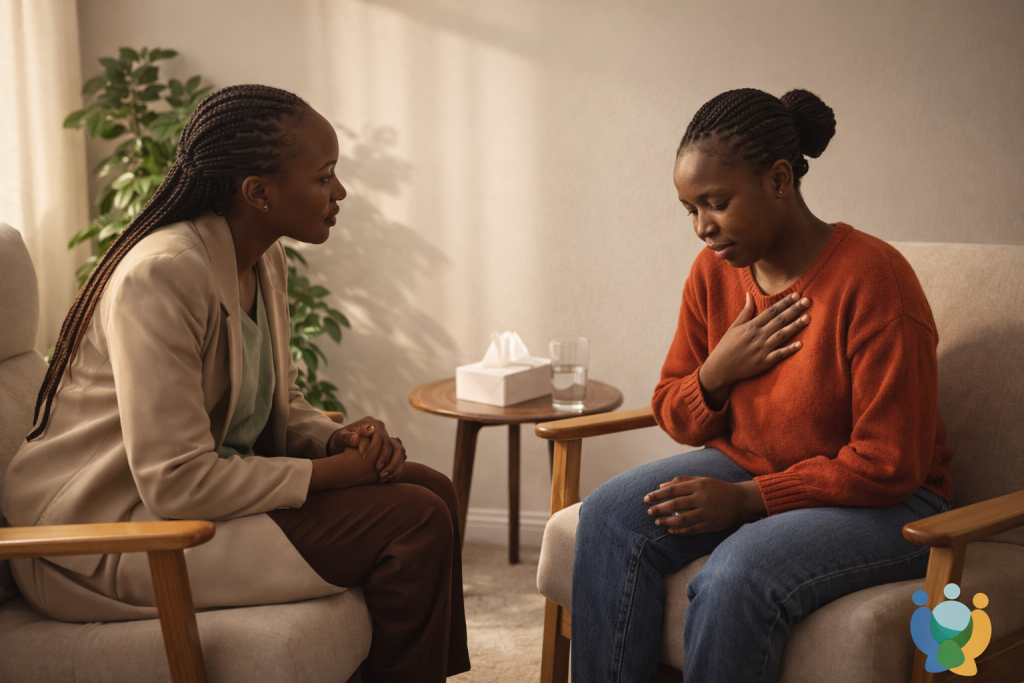
At Clarity, we offer online trauma therapy across Kenya and the diaspora. Sessions are conducted via secure video. The same evidence-based approaches (TF-CBT, EMDR, somatic work) can be delivered effectively online when the therapist is properly trained. You can book a session with Clarity Counselling at a time that works for you.
When Should You See a Therapist for Trauma?
You do not need to wait until you are in crisis. Our full guide on when to see a therapist in Kenya goes deeper, but some signals that it is time:
- It has been more than a month since the event and your symptoms are not improving
- You are avoiding more and more of life — places, people, activities
- Sleep has been disrupted for weeks
- You are using alcohol, drugs, or other numbing behaviours to get through the day
- You feel disconnected from yourself or from people you love
- You are having flashbacks or intrusive memories
- Physical symptoms are mounting and your doctor cannot find a medical cause
- You have thoughts of self-harm or suicide
If you are in crisis or having thoughts of self-harm, please reach out immediately. Befrienders Kenya: +254 722 178 177.
Niskize 24/7 helpline: 0900 620 800. Kenya’s National Suicide Prevention Strategy 2021–2026 recognises timely referral as the single most important intervention.
A Word for NGO Workers, First Responders, and Healthcare Staff
You spend your days holding other people’s trauma. You are the one who answered the call, transported the survivor, took the statement, treated the wound, ran the focus group, sat with the family. You go home and tell yourself you are fine because compared to the people you serve, you are.
Vicarious trauma is real. Compassion fatigue is real. Burnout is the symptom; trauma exposure is the cause. You deserve the same care you give other people. Our Employee Assistance Programmes for NGOs and humanitarian teams and mental health training for managers and NGO staff support teams in Nairobi and across Kenya — call us about staff debriefs, individual therapy, and group programmes.
Your Body Has Been Carrying This Long Enough
Trauma is not weakness. It is not a character flaw. It is not something you should have “gotten over by now.”
It is what happens when something overwhelms your nervous system’s capacity to cope, and your body has been working overtime ever since to keep you safe from a danger that has already passed.
You can heal. The brain is plastic. The body can release what it has been holding. The startle response can quiet. Sleep can return. The road past that junction can become just a road again.
But it does not happen by pushing through. It happens by stopping, turning toward what hurts, and letting a trained therapist walk it with you.
Book a confidential trauma therapy session in Nairobi.
Clarity Counselling and Training Centre — KCPA accredited (No. KCPA/INST/0147/019), Counsellors and Psychologists Board-registered, NITA-certified.
Sessions are KSh 3,500. Insurance accepted. In-person at Utalii House, 3rd Floor, North Wing, Nairobi, and online across Kenya and the diaspora.
Call: +254 114 444 300
Or visit: claritycounseling.co.ke/contact-us