Your Path to Becoming a Counseling Professional: Insights from a Diploma Graduate
Are you curious about what it truly takes to become a professional counselor? Maybe you’ve considered a career in counseling psychology but aren’t sure where to start, or how a course can fit into your busy life.
To help answer these questions, we spoke with Emma Kemuto, Operations Head at Clarity Counseling and a recent graduate of their Diploma in Counseling Psychology.
Emma shares her firsthand experience of why she chose Clarity, the practical skills she gained, and how completing the diploma transformed her confidence and career opportunities.
Whether you’re aiming to help others professionally, grow personally, or explore a new people-centered career path, this Q&A gives you an inside look at the program, its flexibility, and the support you can expect every step of the way.
Read on to discover why Clarity Counseling’s Diploma in Psychology program isn’t just a course, it’s a path to a meaningful, future-proof career, and how you can secure your spot for the January 2026 intake.
A Graduate’s Perspective on Clarity Counseling’s Diploma Program
Q: Emma, can you introduce yourself and tell us about your journey with Clarity Counseling?
Hi, I’m Emma Kemuto, Operations Head at Clarity Counseling and Training Centre, and a recent graduate of the Diploma in Counseling Psychology offered here. When I first enrolled in the diploma program, I wasn’t working at Clarity yet.
I had a full-time job elsewhere, but wanted a program that was flexible and practical, and Clarity Counseling &Training Centre fit perfectly.
Q: What initially drew you to study at Clarity?
I first learned about Clarity through a friend who was a facilitator here. She told me the program was flexible enough to allow me to study from home while working, and I immediately felt it was manageable.
Once I started, what really stood out was how practical the course was. Everything we learned in class, we practiced in real-life scenarios, which helped me integrate theory and skills effectively.
Another standout feature was the facilitators’ empathy and personalized support. They recognized that each student learns differently, some at a faster pace, some at a slower pace, but they ensured everyone progressed at a comfortable pace.
That approach made learning far more engaging and effective.
Q: Can you break down some of the core topics and skills the diploma covers?
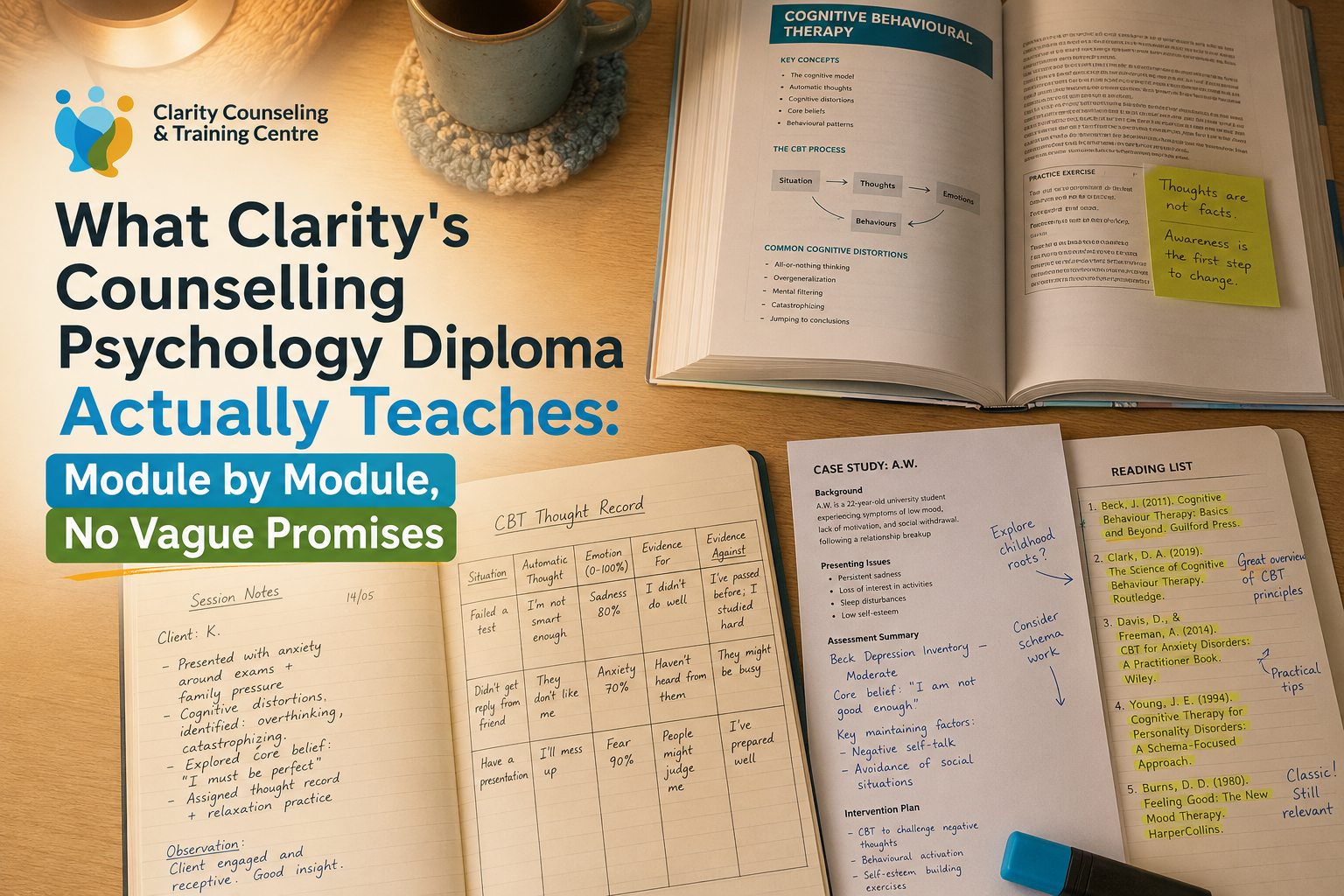
Absolutely. The program covers:
- Counseling Theories: The backbone of counseling psychology. For instance, psychodynamic theory helps us understand how past experiences shape current behavior and interactions. These theories help you understand your journey from childhood to adulthood and how your thoughts influence behavior.
- Counseling Skills & Communication: Practical skills to handle client sessions confidently.
- Ethical and Legal Issues: Essential for practicing responsibly.
- Personal Development: Journaling, self-reflection, and personal growth exercises to deepen self-awareness.
- Supervision & Practical Training: Students engage in real client sessions under supervision, gaining hands-on experience in the counseling process.
By the time you complete the diploma, you’re already equipped to handle clients professionally.
Q: How flexible is the program for someone working full-time?
Very flexible! I attended evening online classes from 6:30 pm to 8:30 pm, which fit perfectly around my work schedule. Clarity’s structure allows professionals to work during the day and still study in the evening.
Q: What kind of student support does Clarity provide?
Support is robust. Supervisors guide students during practical sessions and connect them with NGOs or other opportunities to gain client experience.
If students encounter challenges or have grievances, Clarity offers one-on-one consultations or online meetings to provide guidance and ensure that no one feels alone during this intense program.
Q: Which key skills did you gain from the diploma that you apply in life and work?
Several skills, but three stand out:
- Empathy: I became more understanding of others, which reduced judgment and improved relationships.
- Active Listening: I now listen to understand, not just respond. Many people just need to express their feelings without needing advice.
- Unconditional Positive Regard: Respect for others despite differences in values or choices. This skill has been invaluable in both personal and professional interactions.
Q: How beginner-friendly is the program, and what are the requirements to start?
The courses are very beginner-friendly. No prior experience in psychology is needed.
- Certificate Program: Requires a grade of D plain or higher. Great for personal growth and people-oriented careers.
- Diploma Program: Requires a C- and above. If you don’t meet this grade, you can start with the certificate and progress to the diploma.
This structure ensures that anyone motivated can pursue a career in counselling psychology.
View this post on Instagram
Q: How has completing the diploma impacted your career confidence and opportunities?
The diploma gave me the confidence to work professionally with clients. I realized my natural listening ability could be formalized into a career. Beyond counseling, there are many career paths: training, supervision, running your own practice, or even working in organizations that value mental health expertise.
Q: What myths about counseling psychology did the program help you overcome?
- You can read minds: False skills are observational and empathetic.
- Only for broken people: Anyone can study counseling psychology.
- It’s unpaid charity work: Counseling offers career opportunities and income potential.
- Only for older individuals: Many young students also benefit from counseling.
Q: Why is counseling psychology an essential and future-proof career?
We live in a world with increasing mental health challenges. Counseling cannot be replaced by AI because it requires human empathy, technique, and relationship-building. Starting young gives you more experience, a broader client base, and a lasting impact.
Q: What advice would you give prospective students for the January 2026 intake?
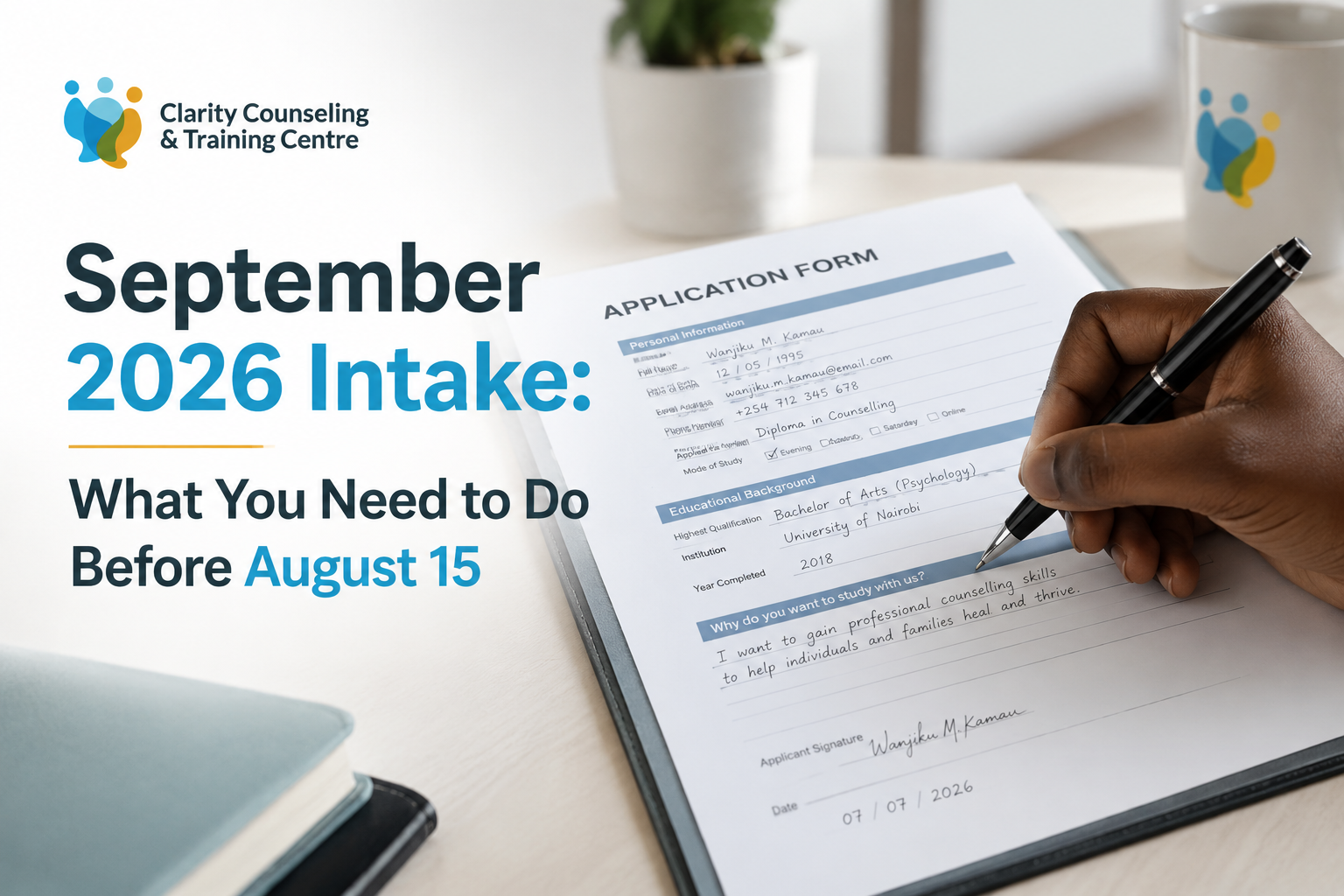
Take this stepit’s transformative. The program works on you first, so you can better help others. Applying is simple: visit www.claritycounseling.co.ke, fill out the application form, and mark your calendar for the orientation on February 12th. Don’t miss this opportunity to grow personally and professionally.
Whether you’re considering personal growth, a career in counseling, or expanding your professional skills, Clarity Counseling’s programs offer a practical, flexible, and supportive environment. Clear your mind, find your path, and start your journey with Clarity Counseling today.