January 2026 Intake Now Open: Learn to Hold Others and Yourself
There’s a quiet space in January.
Not the noise of December parties, the rush to meet deadlines, or the hum of Nairobi’s traffic. Not yet.
It’s the early morning when the city hasn’t fully woken. The slow evening when your phone finally quiets. The commute that gives you a moment to breathe.
In that pause, a question rises:
“How often am I the one people lean on?”
A colleague stayed longer than intended. A student whispered something they’d never tell anyone else. A friend called in tears, unsure why they trusted you. And when you walked away, you carried it home.
You’re good at this. Too good, maybe.
And you wonder: “Is there a way to do this — to help, to guide, to support — without carrying more than I can hold?”
The Weight of Informal Care
Across Kenya, people like you quietly shoulder the emotional weight of their communities.
Teachers listening to students’ worries after class. HR managers quietly mediating conflict. Youth and church leaders walking alongside congregants, navigating grief. Volunteers standing with neighbors after floods, loss, or illness. Diaspora Kenyans holding home in their hearts while supporting communities from afar.
Instinct and compassion have served you well. But experience alone cannot teach boundaries, ethics, or resilience.
Without guidance, care can become exhaustion. Without structure, listening can start to hurt you more than it helps.
Why January Is Your Window
January asks softly:
What if this year you didn’t guess? What if you learned?
The calendar flipping isn’t the reason to start — it’s the chance to notice the patterns you’ve been living, to reflect, and to take the first intentional step.
Starting in January means:
- You enter the year with a plan, not just a resolution.
- You build skills while the world is still on pause.
- You give yourself six months of structured, supportive growth before life speeds up again.
See Yourself in the Work
Picture this:
A student comes to you after class, face pale, words trembling. You know the instinct — listen, comfort, reassure. But instead of leaving the conversation drained and anxious, you remain steady. You understand the emotions, the triggers, the boundaries. You respond with skill, empathy, and confidence.
Or imagine:
A staff meeting spirals into tension, a colleague’s stress spilling into your space. You notice the strain, guide the conversation calmly, and everyone leaves clearer, including yourself.
Or a Sunday after church: someone hesitates at the door, unsure if they should speak. You meet them in a way that is present, warm, and ethically grounded — while knowing you’re supported and not carrying their story home.
This is what training gives you: the ability to hold others without losing yourself.
Who Should Join
You don’t need prior experience. You don’t need a psychology degree. You need:
- Compassion that meets curiosity
- Willingness to reflect on your own reactions
- Desire to grow while helping others
The programme is for those already leaning into others’ lives:
- Teachers and school counselors supporting students through anxiety, grief, and peer pressure
- HR professionals, managers, and corporate leaders guiding employees through stress, burnout, and conflict
- Church and youth leaders walking congregations through emotional and spiritual growth
- Nurses, social workers, and volunteers providing safe, structured support in communities
- Diaspora Kenyans wanting practical ways to impact communities back home
What the Course Teaches — Experientially
This is not a certificate you collect and forget.
Over six months, you engage in learning designed for Kenyan realities:
Foundations & Core Skills:
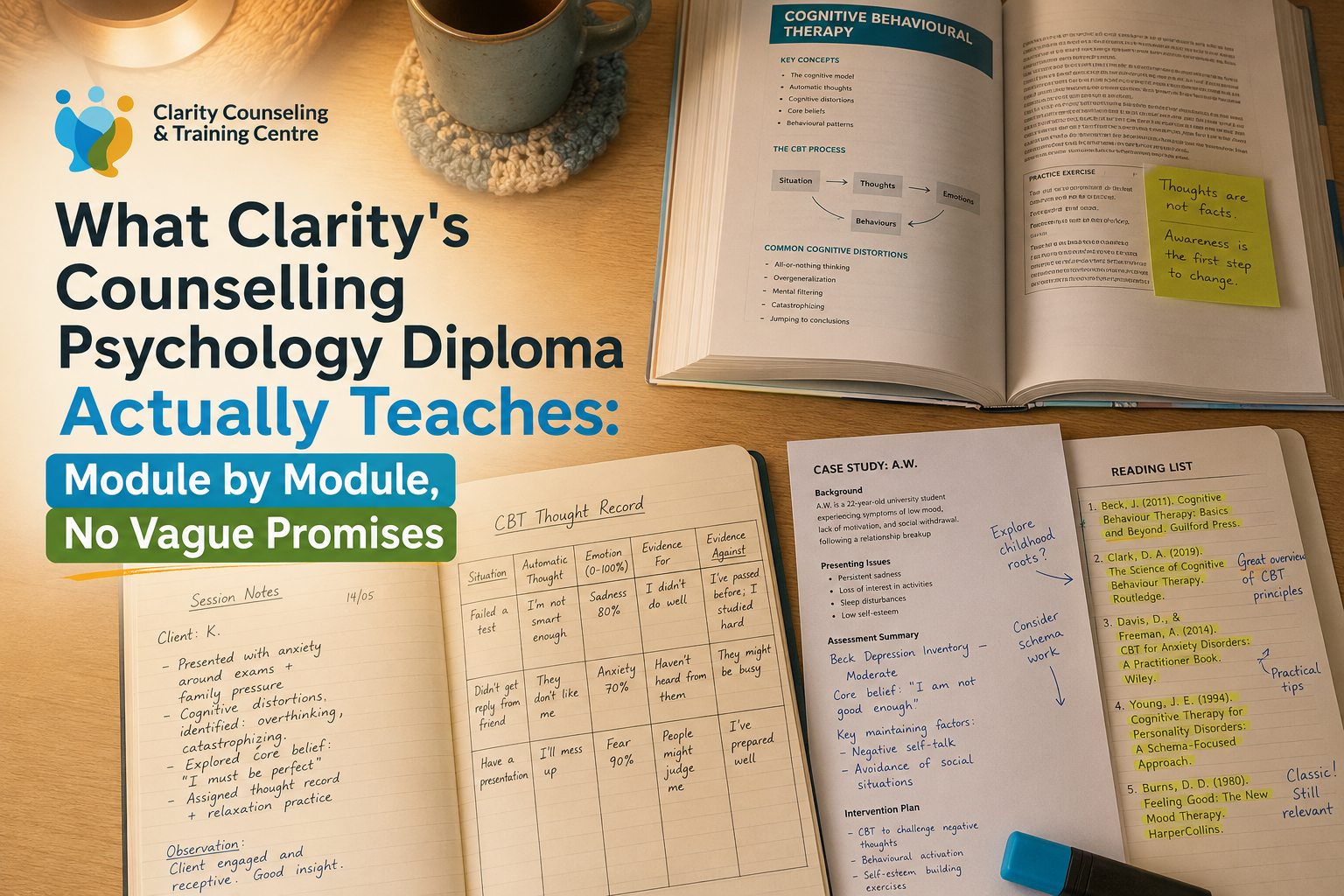
- Counselling theories and frameworks
- Legal and ethical boundaries
- Core counselling skills and practice
- Self-awareness and personal development
- Human growth and development
- Group counselling
Contextual Focus Areas:
- Marriage and family counselling
- Trauma response and psychological first aid
- Loss and grief counselling
You’ll practice in real-life scenarios you’re likely to encounter in schools, offices, homes, and communities. Every unit builds toward confidence, competence, and calm presence.
Your Personal Support System Built-In
Eight personal therapy sessions are included.
Why? Because you cannot guide others without being guided yourself.
These sessions anchor your learning. They allow you to reflect, release, and strengthen. Many learners say these moments — sitting with a professional, untangling your own responses — are where the real growth begins.
Practical Structure, Flexible for Life
- One full day per week: 8:00 AM – 4:30 PM
- Three evenings per week: for working professionals
- Online options: for diaspora learners
- Duration: six months, starting January 25th, 2026
Every component is paced to allow practice, reflection, supervision, and personal growth — no rushing, no overwhelm.
What Will Change for You
By the end of the programme, you will:
- Hold space for others without absorbing their pain
- Respond to trauma, grief, and stress with confidence
- Apply ethical counselling practices in schools, workplaces, and communities
- Reflect on your own growth while guiding others
- Build skills that move you toward career flexibility, leadership, and personal resilience
Your Invitation: Step Into the Year with Purpose
January 25th, 2026, marks the start of a six-month journey that could transform the way you live and work.
This is more than a course — it’s a chance to align your compassion with skill, your instinct with practice, and your heart with steady hands.
Evening or weekend classes in Nairobi, along with online access for diaspora learners, enable you to start without disrupting your life.
If you feel a nudge — not pressure, just recognition — this is your moment.
Clear your mind. Find your path. Begin this January.
Enroll for the January 25th Intake | Nairobi & Online Options