Reasons to Start with Basic Counseling Skills Before a Diploma in Kenya
Imagine you walk into your first Diploma in Counselling Psychology class at Clarity Training Centre in Nairobi. You’ve always been the go-to person for friends who need advice. You are confident, until the lecturer starts throwing around terms like cognitive restructuring, psychodynamic theory, and existential approaches.
Within minutes, your stomach drops. The language feels foreign. The pace? Relentless.
All you wanted was to learn how to help people. Instead, you feel like you are drowning in theory.
Then the questions rest hard:
“Should I have started with Basic Counseling Skills Before a Diploma?
Isn’t that the real qualification?
Or is it smarter to ease in with Basic Counseling Skills and self awareness course first?
These are fair questions that many Kenyan teachers, NGO workers, parents, lawyers, HR professionals, medics and even those in the diaspora wrestle with. Especially those who secretly carry guilt about never having enough time to “go back to school.”
But the hard truth is most people rush to a diploma in counseling psychology because it sounds bigger, better, more prestigious. But what if skipping the basics is the mistake that quietly sabotages your growth?
Let’s break it down. Shall we?
Why These Question Matters
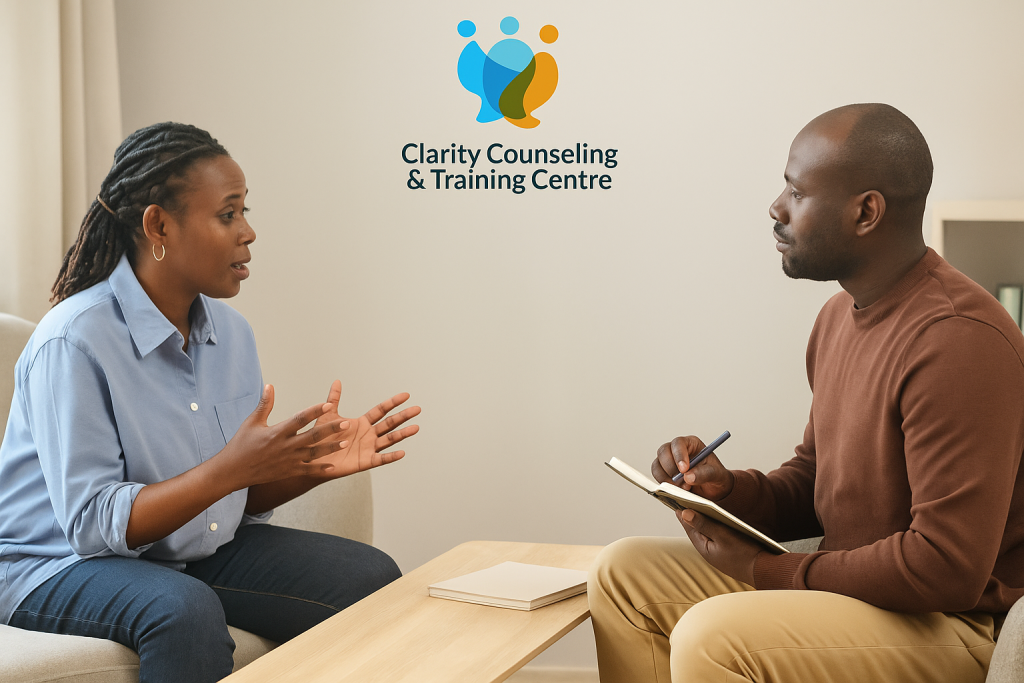
Counselling in Kenya goes beyond memorizing theories into being present, listening and being self-aware. It gives you the ability to sit in silence with someone else’s pain without rushing to fix it.
Yes, a Diploma in Counselling Psychology can teach advanced frameworks and techniques. But if you walk in without the grounding of basic counselling skills, the theories can feel abstract, like floating in the clouds without ever touching the ground.
That’s why so many students in counseling psychology courses in Kenya find themselves asking mid-way through: Am I wasting my time? Should I have started smaller?
Whether you want to practice as a professional counselor, support your community as a church leader, strengthen your role as a parent or HR manager, or simply grow in empathy, these questions matter. Because the way you start determines whether you thrive or struggle on the journey ahead.
The Conventional Approach: Why People Jump Straight to a Diploma
Let’s be honest. The most common belief sounds something like this:
“Skip the small stuff. Go straight for the diploma. It’s faster, it looks professional, and nobody will ask about some short course.”
And on the surface, it makes sense. A psychology diploma in Kenya carries weight. It signals progress, credibility, even prestige. It feels like the real qualification, especially in Kenya where institutions or other counselling centres in Nairobi highlight their diploma programs prominently.
Why do people go this route?
- Saves time. You get to the end goal quicker, or so it seems.
- Boosts image. A diploma title looks impressive on a CV or LinkedIn profile.
- Shortcut mindset. Many believe foundational courses are “optional.”
But more often than not many students who take this route find it challenging to settle into the diploma in the earlier stages.
The diploma in psychology course syllabus dives straight into theories, research methods, and ethics. Without the background of a Basic Counselling skills Course, all of it feels abstract at first.
A Better Way: Start with Basic Counseling Skills
There’s another way. Slower, yes. But smarter.
Begin with a Basic Counseling Skills & Self-Awareness short course.
Think of it as learning to crawl before you walk, walk before you run. Nobody mocks a child for taking baby steps, they celebrate them. Why? Because those steps create balance. Without them, running leads to a fall.
Here’s why starting small is superior:
- Stronger foundation: You’ll master core techniques, active listening, reflecting feelings, asking open-ended questions. These become second nature, so when you meet theories later, they click.
- Confidence building: Instead of feeling thrown into the deep end, you gain steady confidence. The classroom stops being intimidating, because you’ve already practiced the basics.
- Self-awareness: Basic skills courses emphasize exploring your own patterns, triggers, and blind spots. In counseling, who you are is just as important as what you know.
- Filtering test: Unsure if you want to commit years and money? A basic course acts as a low-stakes test. If you love it, you continue to the diploma. If not, you still walk away with life-changing skills.
- Practical application: You don’t have to wait years to use what you learn. Whether you’re a banker, HR professional, pastor, or parent, these skills transform everyday conversations.
Consider two students.
- Student A jumps into a diploma at a counselling centre in Nairobi. Within three months, the workload feels crushing. Everything sounds and feels new, and daunting. By semester two, they quietly withdraw.
- Student B starts with Basic Counseling Skills. They learn how to listen, reflect, and build rapport. They practice in small groups, gaining feedback. They learn a few models of human behaviour. When they transition into the diploma, theories feel exciting, not overwhelming, because they connect to lived practice. Student B thrives.
This isn’t just theory. Many training managers, NGO workers, and parents who’ve completed short courses in counselling psychology in Kenya say the skills reshaped not only their careers, but also their families and communities.
It’s a path that honors your busy life, saves you from burnout, and ensures you don’t just have a diploma, you learn at a pace that allows you to absorb the intricacies of what you need to learn to make a competent Counselling Psychologist.
Addressing 4 Common Myths About Basic Counseling Skills
1: “It’s a waste of time, I want my diploma now.”
Rushing might feel efficient, but it often backfires. Starting small may actually save time. Why? Because dropout, overwhelm, or repeating classes wastes far more.
2: “Employers care about diplomas, not short courses.”
Diplomas are important, yes. But employers and clients aren’t just looking for certificates. They want competence. The Kenya Counselling and Psychological Association (KCPA), for instance, emphasizes skills and ethics, not just paper. A Basic Counseling Skills course prepares you for the intense journey ahead of you that is the Diploma Course.
3: “I already have good people skills.”
Great, you’ve got a head start. But professional counseling is more than just being a “good listener.” It’s about structured techniques, like reframing, paraphrasing, silence, that turn instinct into professional strength. Even seasoned psychologists in Nairobi revisit these basics often.
4: “It’s too basic. I’ll be bored.”
Basics sound simple until you apply them consistently. Listening without interrupting. Reflecting instead of advising. Sitting in silence without rushing. These aren’t easy, they’re profound. And they remain relevant whether you’re offering counselling services in Kenya or managing conflict as a law enforcement officer. Let’s not forget the self awareness part as well. There is nothing basic about learning to make healthier life choices, manage stress and resolve conflicts.
Putting It All Together: Your Path Forward
Starting with Basic Counseling Skills doesn’t slow you down. It launches you.
Here’s a simple roadmap many successful counselors in Nairobi have followed:
- Begin with Basic Counseling Skills & Self-Awareness. Use this to explore, grow, and test your commitment.
- Apply the skills. Practice in your workplace, church, or family life. Notice how conversations shift.
- Step into a Diploma in Counselling Psychology. By now, you’ll be grounded, confident, and ready for the theories.
This approach protects your investment. It ensures your money and time go into a diploma when you’re truly ready, not when you’re guessing. It’s the difference between rushing to tick a box and choosing a path that transforms you.
And here’s something many don’t realize: even if you never move into full-time counseling, the skills ripple across every part of your life. From marriage counseling to navigating family conflict, from managing a team in a bank to supporting a struggling student, the skills are universal.
So ask yourself: is it really a delay, or is it the smartest possible launchpad?

Call to Reflection
Here’s the bottom line. Skipping basics feels tempting. It looks faster. It sounds smarter. But in reality, it often leaves you shaky, overwhelmed, and doubting yourself.
Starting with Basic Counseling Skills, on the other hand, builds a foundation. It gives you tools you can use immediately, in your job, your family, your church, your community. It prepares you for deeper studies, ensuring your diploma isn’t just another paper, but a lived skill set that serves others.
So pause and reflect: do you want to chase a title, or do you want to grow into someone who can truly sit with another person’s pain? Do you want to rush the house, or lay the stones that make it stand for a lifetime?
If your heart leans toward the second, then the path is clear. Start small. Build steady. Grow strong.
And if you’re ready, Clarity Counseling’s Basic Counseling Skills & Self-Awareness course is designed to give you that exact launchpad. One step. One course. A foundation for every future step you take.
Because real change doesn’t start with theory. It starts with the basics.