Certificate, Diploma, or Short Course in Counselling Psychology Kenya: How to Choose Without Wasting a Year
Three people walk into Clarity’s admissions office.
The first is a primary school teacher. She has been the unofficial counsellor for her school for six years. She wants grounding for what she is already doing. She is not planning to leave teaching. She has four months before the September intake and she is not sure she can afford to take time off for a long programme.
The second is an NGO programme officer who has spent eight years working with GBV survivors. He wants to practise as a counsellor eventually, to open a private practice in his county, and he understands this will take a formal qualification and registration.
The third works in a corporate HR team. She is not planning a career change. Her director has asked her to run an employee wellbeing workshop next quarter, and she wants to do it properly, not from a Google doc.
All three are in the right place. None of them needs the same thing.
The Three Pathways
| Short Course | Certificate | Diploma | |
| Duration | Days to weeks | 6 months | Multiple semesters |
| Fee | Contact Clarity | KSh 61,500 | KSh 181,500 |
| Schedule | Intensive weekends or online | Evening and weekend. Online available. | Evening and weekend. Online available. |
| Entry requirement | Open access (most courses) | KCSE grade D or equivalent | KCSE grade C- minus or equivalent |
| Personal therapy required | No | Yes- 8 sessions | Yes — 20 sessions |
| Supervised client hours | No | Peer-to-peer sessions in class | Full practicum required |
| Professional registration | Not applicable | Non-clinical counseling roles | CPB and KCPA registration pathway |
| Payment plans | yes | Yes | Yes |
| Online available | Yes | Yes | Yes |
What the Short Course Is For
Short courses are intensive, specific, and practical. They are not entry points into the counselling profession. They are skill and knowledge upgrades for people already working with other people. Clarity’s current short course offerings include Basic Counselling Skills, Emotional Intelligence, and Self-Awareness and Personal Development. Browse current short courses.
The teacher who wants to handle difficult student conversations better. The manager asked to run a team wellbeing session. The pastor who wants better frameworks for the pastoral conversations they are already having. Short courses work for all of these. They do not work if the goal is professional counselling practice.
What the Certificate Is For
Six months. Evenings and weekends. A professional framework for what many Certificate students are already doing informally. The Certificate qualifies you for non-clinical counselling roles across education, community development, corporate wellness, NGO programme work, and pastoral settings. It is also the most common starting point for people who are not yet certain about the full professional pathway. Certificate in Counselling Psychology.
The Certificate does not qualify you for CPB registration or most clinical employment in hospitals, NGOs at a clinical level, or private practice. If those are your goals, the Certificate is a starting point, not an endpoint.
What the Diploma Is For
The Diploma is the professional qualification. It meets the training requirements for registration with the Counsellors and Psychologists Board (CPB), which is legally required for private practice, most hospital positions, and many NGO clinical roles. It is also the most demanding programme: mandatory personal therapy, a supervised practicum with real clients, and multiple semesters of content that goes significantly deeper than the Certificate.
→ Diploma in Counselling Psychology
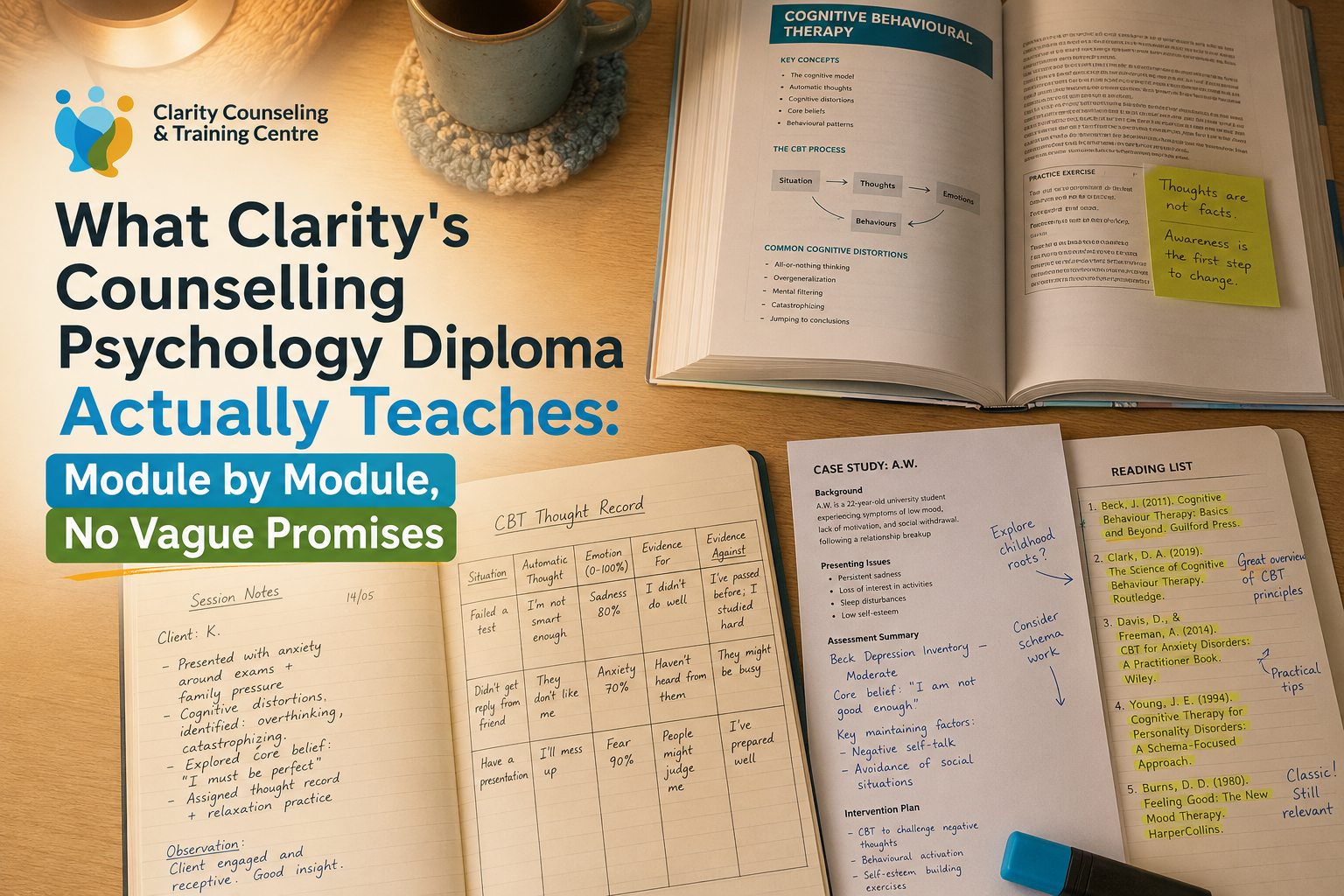
→ What the Diploma actually teaches, module by module
The Question That Resolves It
Not which qualification sounds most impressive. Not which one your friend did. The one question that resolves this:
Where do you want to be in three years and what does that person actually need behind their name to function in that role?
If the answer is: I want to be better at supporting the people I already work with without changing careers, then the short course or Certificate is the right choice.
If the answer is: I want to practise as a counselling psychologist, run a private practice, or work in a clinical setting, the Diploma is the answer.
If the answer is genuinely uncertain: start with the Certificate. Six months of real training will make it clear in a way that reading course descriptions never will.
The Mental Health Workforce Context
It is worth understanding what you are walking into. Kenya has 150 psychiatrists for a population of more than 50 million, with only 16 of 47 counties having even one public-sector psychiatrist. The need for qualified counselling psychologists is not theoretical. Every properly trained counsellor who enters the profession serves people who would otherwise have nowhere to go. The KCPA accreditation Clarity holds exists to ensure that training meets the professional standard the population deserves.
September 2026: What Is Still Available
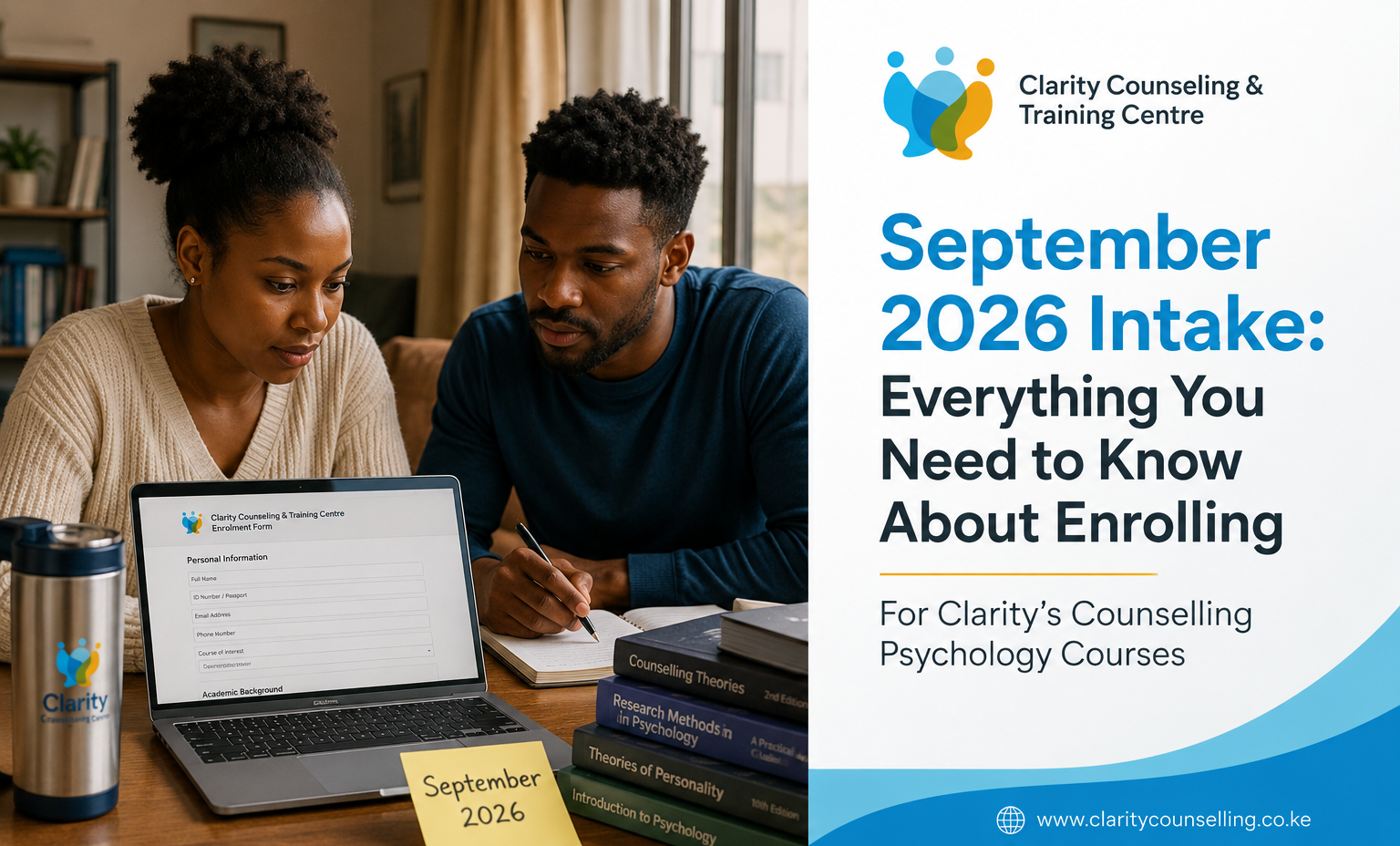
Applications for September 2026 close on August 15. All three pathways have spaces available for this intake. If you are not sure which is right for you, call or WhatsApp the admissions team before you apply.
→ Full September 2026 Enrolment Guide
→ Diploma in Counselling Psychology
→ WhatsApp: +254 (0) 101 515 101 | Call: +254 (0) 114 444 300
Frequently Asked Questions
What is the difference between a counselling certificate and a diploma in Kenya?
The Certificate is a six-month programme qualifying you for non-clinical counselling and support roles. The Diploma is the full professional qualification that meets CPB registration requirements for licensed counselling practice.
Can I do a short course and then upgrade to the Certificate or Diploma?
Short courses are not academic prerequisites for either the Certificate or Diploma. You can complete a short course and then apply for either separately. Entry is assessed on academic qualifications and suitability.
Which counselling course can I study online in Kenya?
All three pathways at Clarity, short courses, Certificate, and Diploma, are available with online delivery options. Contact Clarity to confirm the exact format for your preferred intake.
Is the Clarity Certificate enough to get a job as a counsellor in Kenya?
It qualifies you for non-clinical counselling support roles across education, NGOs, corporate wellness, and community settings. It does not meet CPB registration requirements for licensed private practice or hospital-based clinical positions. For those roles, the Diploma is required.
What is the deadline for September 2026 counselling applications at Clarity?
August 15, 2026. Contact the admissions team directly to confirm your place once your application is ready.
→ How to Become a Counselling Psychologist in Kenya
→ WhatsApp: +254 (0) 101 515 101 | Call: +254 (0) 114 444 300