Therapy for Church Leaders and Pastors in Kenya
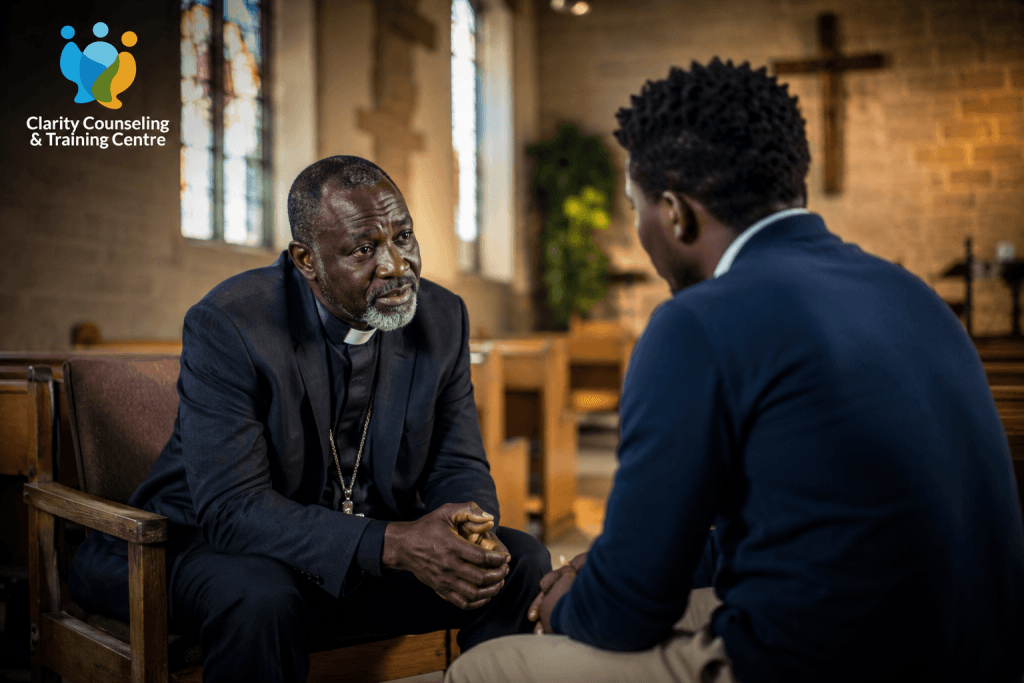
He sat with a widow on Tuesday. Listened to her grief for an hour and said the right things. On Wednesday he was in the hospital room where the diagnosis was terminal. Thursday was a board meeting that lasted until ten. Friday was a funeral.
On Sunday he stood at the pulpit and preached about hope.
And every single person in that room believed him.
What the congregation does not know — what he has not told a single person — is that he has not slept properly in four months. That somewhere between the hospital visit and the board meeting and the funeral, something in him went quiet in a way that frightens him. That the hope he preaches on Sunday mornings feels, on Saturday nights, very far away.
He has prayed about it. He has fasted. He has told himself this is just a season.
He has not considered therapy because — well. Pastors do not need therapy. Do they?
View this post on Instagram
What Nobody Tells You About the Emotional Cost of Ministry
The pastoral calling is genuinely beautiful. It is also, by design, emotionally expensive in ways that most other professions are not.
Consider what a single week in ministry often contains:
- Sitting with bereavement, illness, marital breakdown, and suicidal ideation — often in consecutive hours
- Absorbing other people’s pain, fear, and trauma without a structured way to process it
- Being expected to model peace and remain spiritually steady regardless of personal circumstances
- Navigating conflict within church leadership while remaining pastorally available to those involved
- Carrying financial pressure, administrative burden, and family life simultaneously
- Providing counselling — often informally and without training — to people in genuine clinical distress
There is a clinical term for what accumulates from sustained exposure to others’ trauma: secondary traumatic stress. There is another for the exhaustion of perpetual emotional giving: compassion fatigue. And another for the specific depletion of inhabiting a role that does not allow you to be anything other than strong: leadership isolation.
Kenyan pastors carry all three — often without naming them, and often without knowing that help exists.
| A 2023 survey of faith leaders in Sub-Saharan Africa found that over 60% reported symptoms consistent with burnout — emotional exhaustion, detachment from ministry, and a reduced sense of personal efficacy. Fewer than 15% had ever spoken to a mental health professional. In Kenya, the Mental Health Act 2023 formally recognises the mental health needs of caregiving professions, including religious leaders. The gap between need and help-seeking remains wide. |
Ministry Burnout: What It Actually Looks Like
Burnout in ministry does not always announce itself. It tends to arrive quietly, dressed in familiar clothes.
| Sign | What It Often Looks Like in Ministry |
|---|---|
| Emotional numbness | Going through the motions of pastoral care without feeling anything. Visiting the sick and feeling distantly sorry rather than genuinely present. |
| Dreading what used to bring life | Sundays that once energised now produce a low dread. Preaching that once flowed now requires enormous effort. |
| Loss of the inner life | Prayer that feels hollow. Devotional life that has become mechanical. A spiritual disconnection you cannot explain and are ashamed to admit. |
| Irritability and withdrawal | Snapping at your spouse or children. Withdrawing from people you love. Preferring solitude not for restoration but for escape. |
| Physical symptoms | Persistent exhaustion, insomnia, headaches — the body expressing what the mind cannot. |
| The split self | Preaching hope you no longer feel. The growing gap between the pastor the congregation knows and the person who drives home after church. |
If three or more of these are familiar, this is not a spiritual problem that prayer alone will fix. This is a human being running on empty — and the most faithful thing you can do for your congregation, your family, and your calling is to refill the tank.
For a broader look at the signs of caregiver burnout and how to address them, see our post: Caregiver Burnout in Kenya: Signs, Causes, and How to Recover.
The Questions Pastors Ask Before Seeking Help
In over a decade of working with faith communities in Nairobi, our therapists have heard these questions often. They deserve honest answers.
Is it okay for a pastor to see a therapist?
Yes. Seeing a therapist is not a sign that your faith is weak. It is a sign that you are taking the stewardship of your inner life seriously.
Many of the most respected pastoral theologians — Eugene Peterson, Henri Nouwen, Pete Scazzero — have written about what happens when pastors neglect their interior world: the ministry continues, but the minister quietly disappears. Therapy is one tool for preventing that.
At Clarity, our therapists work with faith-integrated care as a framework — meaning faith is not set aside or treated as a complication. It is part of the conversation.
What if my church finds out?
Confidentiality is a clinical and ethical obligation, not just a preference. Therapists registered with the Counsellors and Psychologists Board (CPB) are bound by a professional code of ethics that protects client confidentiality in virtually all circumstances.
What you share in a therapy room stays there. We also recognise that for many Kenyan pastors the stigma concern is real. For this reason, Clarity offers discreet scheduling for clients in visible ministry roles.
Can faith and therapy work together?
Not only can they — for many people of faith, they work better together than either does alone.
Faith provides meaning, community, and spiritual resources. Therapy provides a structured, evidence-based process for understanding patterns, processing pain, and developing emotional tools that the faith community alone cannot always offer. As we explore in our faith and mental health post, the most effective approach for Kenyan Christians is often one that holds both.
What if I’m the one people call when they need a therapist?
Many Kenyan pastors function as de facto counsellors — listening to depression, grief, trauma, and addiction without training, without supervision, and without a place to process what they absorb. This is one of the most invisible sources of pastoral stress.
Some pastors who come to us for personal therapy also enrol in our Basic Counselling Skills course — not to become therapists, but to develop a framework for the pastoral counselling they are already doing, and to understand when and how to refer.
What Faith-Integrated Therapy at Clarity Looks Like
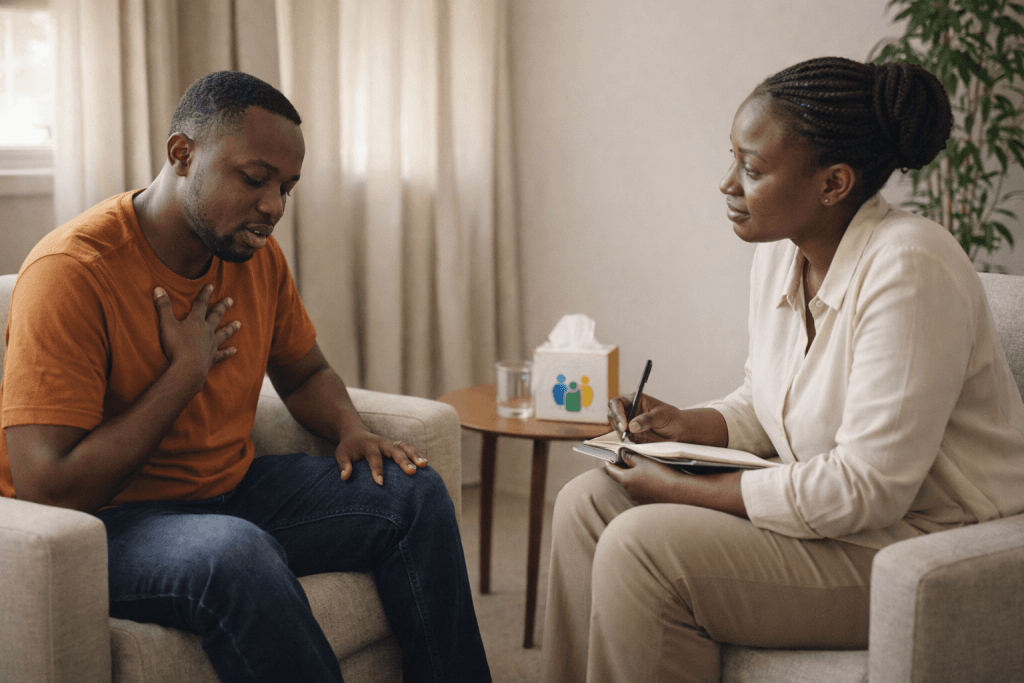
Faith-integrated therapy does not mean every session begins with a prayer (though it can, if you want it to). It means your therapist understands the world you inhabit — the theological framework, the pastoral role, the expectations of the congregation, the spiritual disciplines you practise and the weight they sometimes carry.
It means you do not have to explain what it feels like to preach on a Sunday morning when your marriage is struggling. Or what spiritual dryness actually means, and why saying “I just need to pray more” has stopped working.
| You share what brought you in — at whatever level of depth feels right. Your therapist listens without judgment, without a theological agenda, and without expecting you to have it together. There is no requirement to present as the pastor in a therapy room. You can simply be a person who is tired. That is enough to begin. Sessions at Clarity are 50 minutes. Everything discussed remains confidential. |
For Spouses and Ministry Leadership Teams
This post is also for the spouse of a pastor who is watching something quietly break and does not know how to name it. Or for the church elder who has noticed that your senior pastor is not okay but does not know how to raise it.
Pastoral burnout does not only affect the pastor. It moves through families and ministry teams in ways that often go unaddressed for too long.
For Churches: Equipping Leaders with Counselling Skills
Our Basic Counselling Skills course is designed for people who are not therapists but who regularly find themselves in helping roles — pastors, elders, deacons, cell group leaders, women’s ministry coordinators. The course covers active listening, recognising when to refer, how to hold a conversation without taking on the weight of it, and how to support someone in distress without carrying the distress home.
It is not therapy training. It is the foundation that makes pastoral care sustainable.

Frequently Asked Questions
Is it okay for a pastor to see a therapist?
Yes. Seeing a therapist is a form of stewardship — of your mental health, your ministry, and the people who depend on you. It is not a sign of weak faith. At Clarity, faith and therapy are integrated, not in conflict.
What if my church finds out I see a therapist?
Your therapist is bound by professional confidentiality rules under the CPB. What you share in a session is private by law and ethics. Clarity also offers discreet scheduling for clients in visible ministry roles.
Can faith and therapy work together?
Not only can they — for most Kenyan Christians in ministry, an integrated approach is more effective than either alone. At Clarity, your faith is part of the conversation, not something to be set aside.
Where can pastors get confidential help in Kenya?
Clarity Counselling & Training Centre in Nairobi offers individual therapy with therapists trained in faith-integrated care. Sessions are confidential, available in-person and online. WhatsApp +254 (0) 101 515 101 or visit claritycounseling.co.ke to begin.
View this post on Instagram
| You have carried enough. Let someone carry you for a while.
Confidential, faith-integrated therapy for pastors, church leaders, ministry coordinators, and their spouses. → Basic Counselling Skills course for ministry teams → WhatsApp: +254 (0) 101 515 101 → Download the Ministry Leader Emotional Health Assessment (PDF) |