Couples Therapy in Kenya: When to Go, What It Costs, and Why It’s Not Just for Marriages ‘in Trouble’
They have a good marriage.
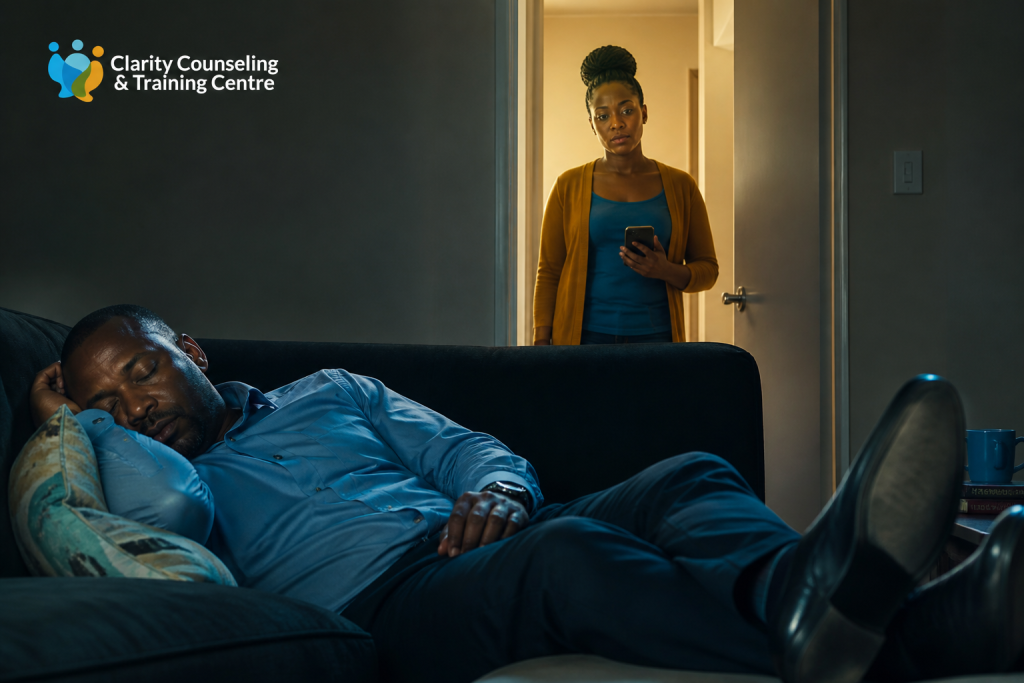
On paper, at least. Two incomes. A house in a decent estate. Children who are doing well at school. They go to church together. They do not argue loudly.
But they have been in the same argument for three years.
It changes shape. Sometimes it is about money. Sometimes it is about his family. Sometimes it is about how she feels invisible, or how he feels criticised no matter what he does. But it is always the same argument, and it always ends the same way: silence that lasts two or three days, and then a return to normal that everyone in the house knows is not really normal.
Neither of them would say their marriage is in trouble.
Neither of them can remember the last time they genuinely felt like teammates.
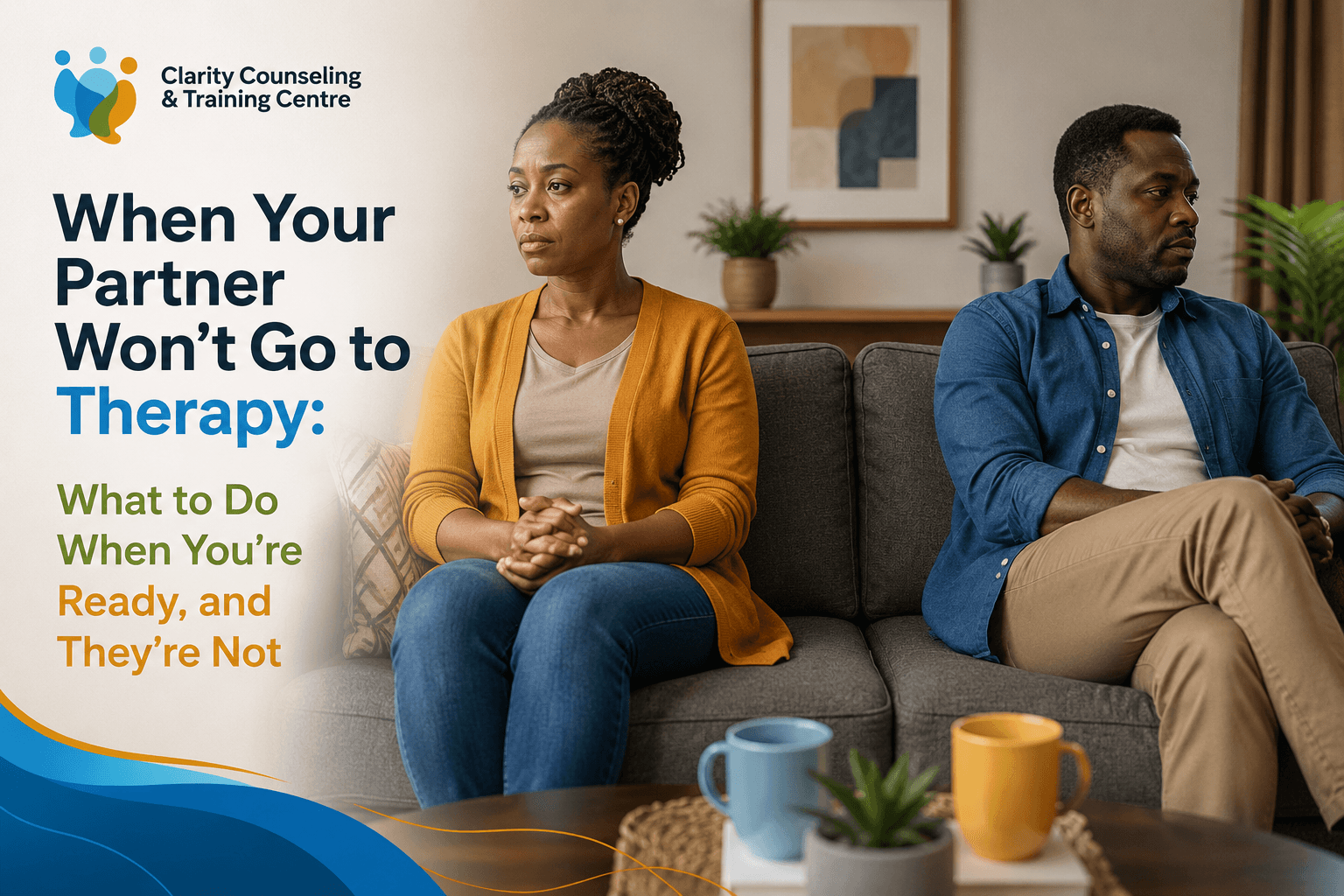
They have both googled “couples therapy Nairobi” at different times, late at night, and both closed the tab without booking — because they are not that couple. They do not need that. Do they?
| Yes. Not because their marriage is failing — but because the patterns that quietly drain a relationship rarely correct themselves. Couples therapy is not a last resort. It is a tool. And the couples who use it earliest tend to see the most change. |
What Couples Therapy Actually Is (And What It Isn’t)
Couples therapy is a structured, evidence-based process in which two people work with a trained therapist to understand the patterns in their relationship, communicate more effectively, and build — or rebuild — connection.
It is not:
- A mediator choosing sides
- A session where one partner is diagnosed as the problem
- A last-resort intervention for marriages on the verge of ending
- Something only people with “serious issues” need
It is:
- A space where both people can speak and be genuinely heard
- A process that names patterns neither partner could articulate alone
- A place to develop new skills — communication, repair, emotional attunement
- Available to couples at any stage: new relationships, 20-year marriages, unmarried partners
The most widely researched model for couples therapy globally is the Gottman Method, developed from four decades of relationship research. It identifies specific predictors of relationship breakdown: contempt, defensiveness, stonewalling, and criticism —and specific tools for reversing them. At Clarity, our couples therapists are trained in evidence-based approaches, including the Gottman Method, Emotionally Focused Therapy (EFT), and Narrative approaches.
5 Signs It Might Be Time — Before Things Are ‘In Trouble.’
The couples who benefit most from therapy are rarely the ones in crisis. They are the ones who recognise these signs early.
| Sign | What It Sounds Like |
|---|---|
| You keep having the same argument | “We’ve been through this a hundred times.” The topic changes but the feeling doesn’t — one of you feels unseen, the other feels unfairly judged. |
| Emotional distance has settled in | You share a house. You share a bed. But somewhere in the daily logistics of Nairobi life, the two of you stopped really connecting. |
| One partner has withdrawn | Withdrawal is often a protective strategy, not indifference. From the outside it feels like the relationship is dying by silence. This is highly treatable in therapy. |
| A specific event created a rupture | An affair. A financial betrayal. A period of extreme stress that changed how you relate to each other. Something happened and neither of you has fully processed it together. |
| You find it easier to talk to anyone but each other | You tell your best friend things you don’t tell your spouse. The relationship has become the place where communication is hardest. |
What Actually Happens in a Session
Session One: The Assessment
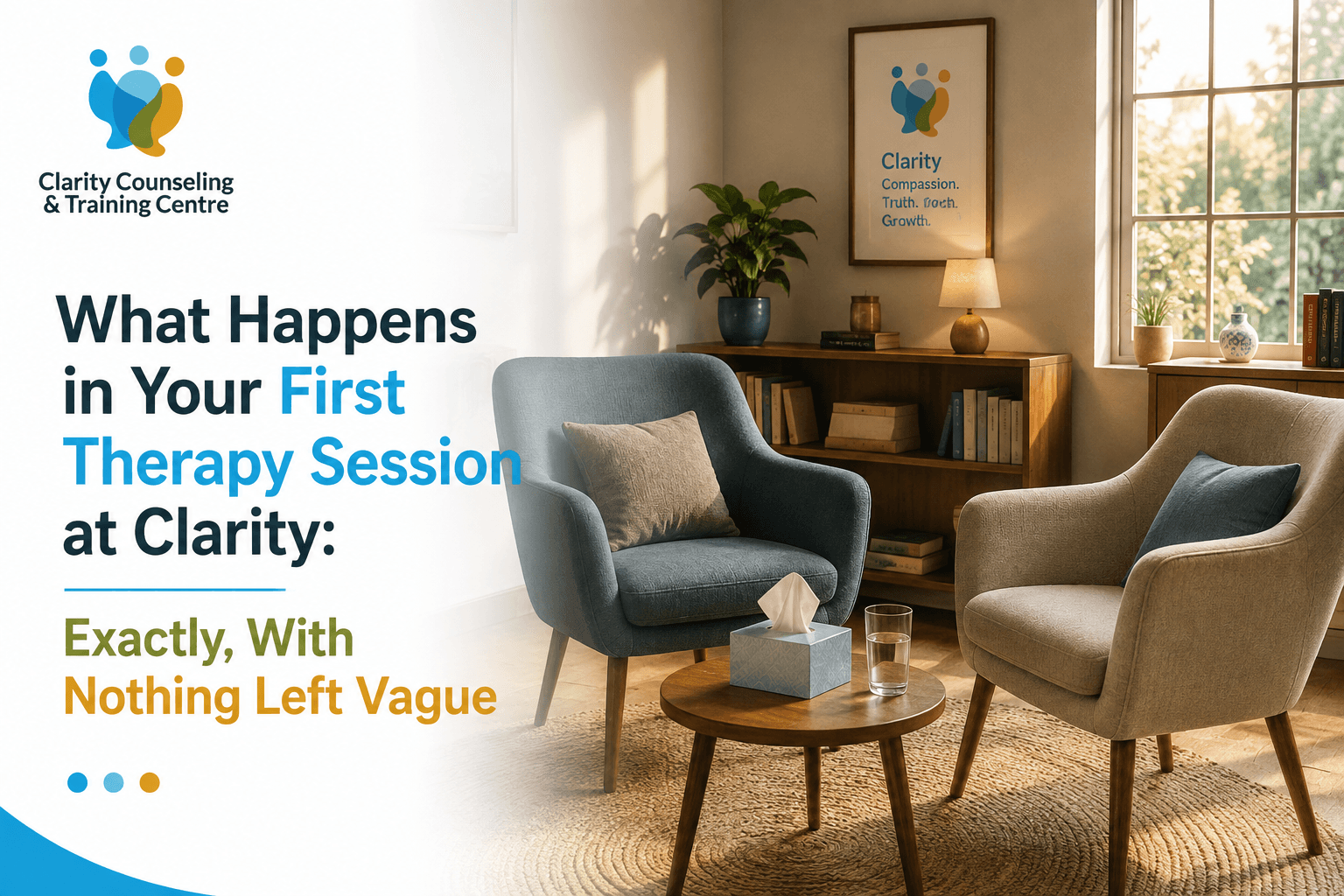
Your therapist meets with both of you and begins to understand your relationship — its strengths, its history, and the specific patterns that brought you in. There is no pressure to disclose everything on day one. The therapist is listening for the dynamic between you, not just the content of the problem.
Some therapists also schedule individual sessions with each partner before beginning joint work, giving each person space to share what they might not say in front of their partner.
Sessions 2 Onwards: Building New Patterns
Depending on the approach, sessions might involve:
- Learning new communication tools — including how to express a need without triggering a defensive response
- Mapping the specific cycle your relationship falls into during conflict
- Processing unresolved hurt — events or periods that have left residue neither of you has addressed
- Building small rituals of connection in the ordinary rhythm of daily life
- For Christian couples, integrating faith values into the therapeutic framework
Can One Partner Come Alone?
Yes — with some important nuance.
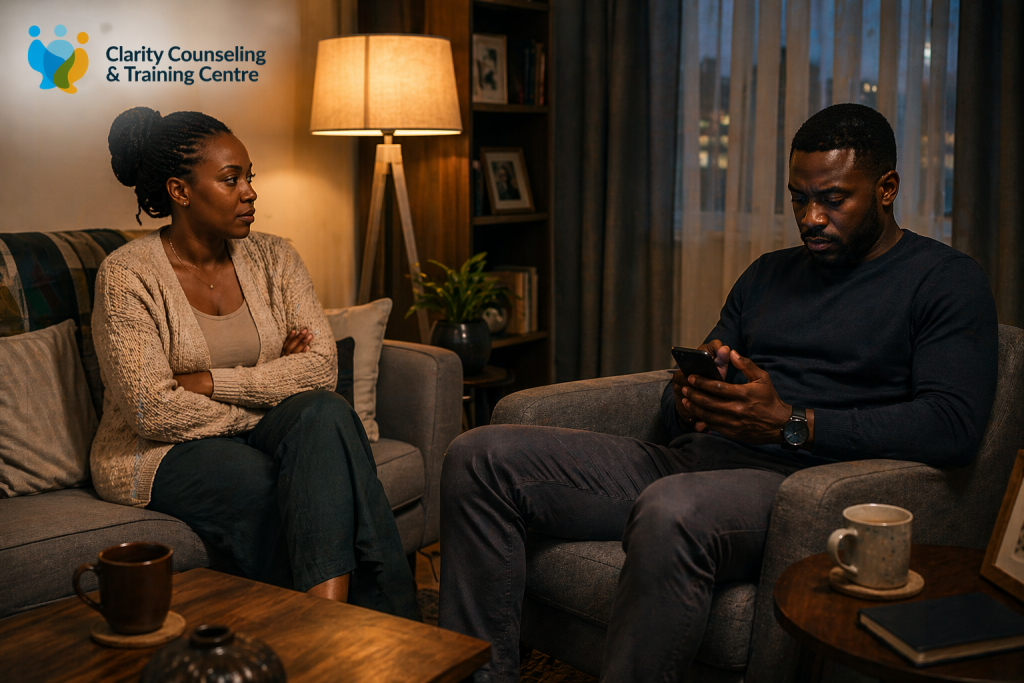
If your partner is unwilling to attend couples therapy, you can still benefit from individual therapy to work on your relational patterns. Many people who begin as individual clients make significant changes in how they show up in their relationships, even without their partner present.
If you are in this situation, our individual therapy page explains how to begin. Our men and therapy in Kenya post also addresses partner reluctance from a specific angle.
How Many Sessions Does Couples Therapy Take?
| Goal | Estimated Sessions | Notes |
|---|---|---|
| Communication skills and patterns | 6–10 sessions | Couples without a specific crisis often see significant change within this range |
| Processing a specific event (affair, betrayal, loss) | 12–20+ sessions | Deeper trust and repair work requires more time and should not be rushed |
| Major transition (new baby, relocation, blended family) | 6–12 sessions | Preventive and transitional work — highly effective as early intervention |
| Long-standing patterns across many years | 15–25+ sessions | Sustained patterns take time to shift; consistency matters more than speed |
Sessions are typically 60–75 minutes. Most couples begin weekly and move to fortnightly once momentum is established.
What Does Couples Therapy Cost in Kenya?
This is the question most Kenyan couples search for before booking — and it deserves a direct answer.
| Provider Type | Typical Cost per Session (KES) | Notes |
|---|---|---|
| Private counselling centres (mid-range) | 3,500 – 6,000 | Per 60–75 min session; couples sessions sometimes slightly higher than individual |
| Higher-end or specialist practices | 6,000 – 12,000+ | Senior therapists or specialist couples work in upmarket Nairobi practices |
| NGO / low-cost services | 500 – 2,000 (or free) | Available but often with waiting lists; may not offer specialist couples work |
| Online sessions | 3,000 – 7,000 | Quality varies widely — always verify CPB registration regardless of format |
| Some private insurers in Kenya cover outpatient mental health services including counselling. Whether couples therapy specifically is covered depends on your insurer and your plan. SHA (formerly NHIF) covers mental health services at accredited facilities; couples therapy availability varies by provider. For a full breakdown, see our guide: Does SHA Cover Therapy? Your Complete 2026 Guide. At Clarity, we are happy to discuss session costs directly — WhatsApp +254 (0) 101 515 101. |
Christian Couples Counselling at Clarity
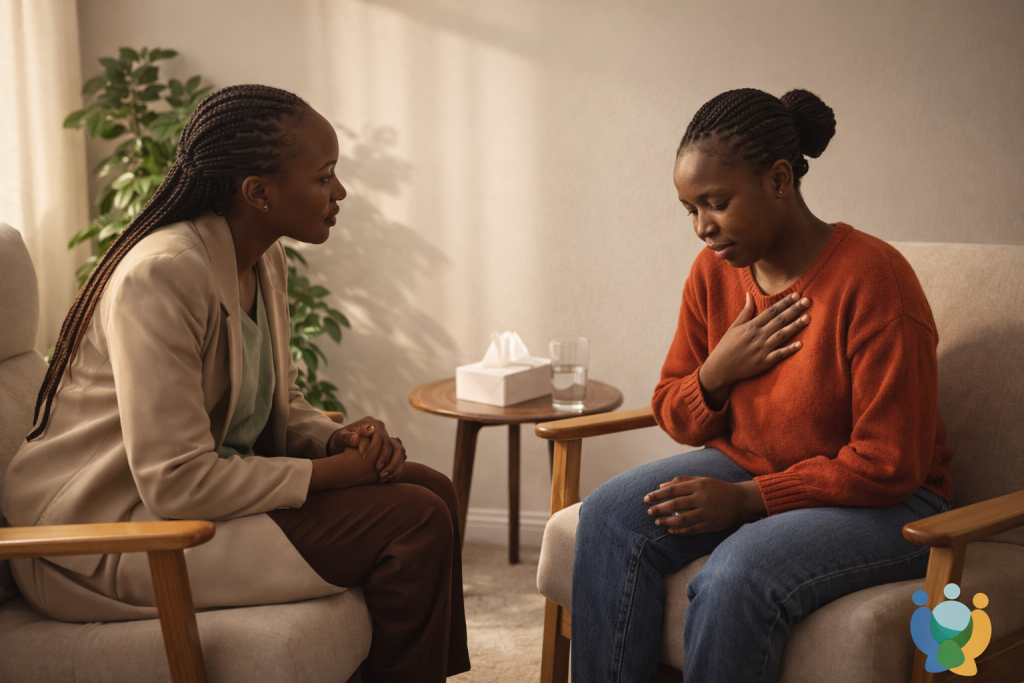
Many Kenyan couples who seek therapy at Clarity raise concerns about faith. For Christian couples, the decision to seek outside help sometimes carries an added layer of hesitation — the sense that a healthy Christian marriage should be sustainable through prayer, Scripture, and community alone.
We take that view seriously rather than dismissing it. Prayer, Scripture, and community are genuine resources. And they often are not enough on their own — because relationship patterns are not primarily a spiritual problem. They are a human one.
Faith-integrated couples therapy at Clarity means your therapist holds your shared values as part of the framework — not as a constraint, but as a resource. You can read more in our faith and mental health post.
We also work with couples from different faith backgrounds, and with couples where one partner holds faith and the other does not.
What If One of Us Does Not Want to Come?
This is more common than most people realise, and it rarely means the relationship cannot change.
- “I want us to have better tools” lands differently than “Something is wrong with us.”
- Three sessions with the option to stop. Low stakes — often enough to show it is not what they feared.
- Your own change often creates space for theirs.
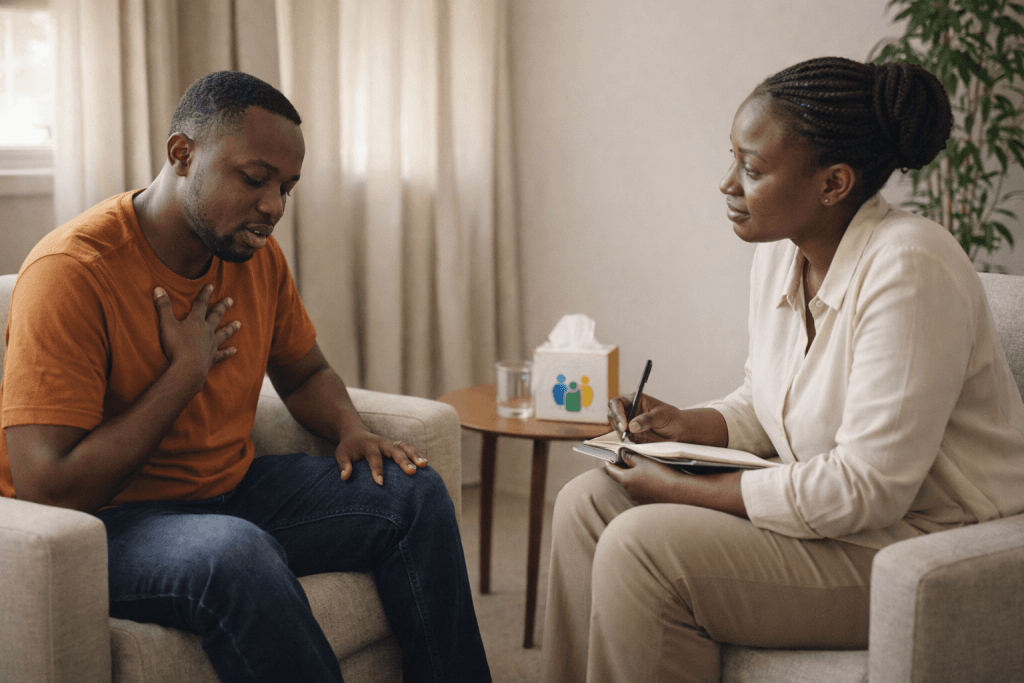
- This post was written partly for that person. Our men and therapy post specifically addresses the reluctance many Kenyan men feel.
Frequently Asked Questions
When should we start couples therapy?
The best time is before things feel urgent. Most couples who benefit most are not in crisis — they have noticed patterns that are not serving them and want to change them before they calcify. You do not have to be falling apart to benefit from couples therapy.
Can one partner attend couples therapy alone?
Yes. If your partner is unwilling to attend, individual therapy can still produce significant relational change. It is also possible that as your partner sees the change in you, they become willing to join.
How many sessions are needed?
This depends on what you are working on. Communication and pattern work: 6–10 sessions. Processing a specific rupture: 12–20+ sessions. Most couples begin weekly and move to fortnightly as progress is established.
Does Clarity offer Christian couples counselling?
Yes. Our therapists are trained to work with faith-integrated approaches, holding the couple’s shared values as part of the therapeutic framework. We work with Christian couples, couples from other faiths, and couples with differing beliefs. See also: Faith and Mental Health in Kenya.
| You have been in the same conversation for long enough.
Couples therapy at Clarity is confidential, evidence-based, and designed for Kenyan couples at any stage. → Schedule a couples consultation → WhatsApp: +254 (0) 101 515 101 → Download the Couples Communication Health Check (PDF) Related reading: Marriage counselling in Nairobi · Men and therapy in Kenya · Love languages and mental health |