5 Stages to Expect Emotionally During Therapy (That No One Talks About)
You’ve seen and read in the glossy brochures how therapy looks like a calm room, a soft chair, and a friendly nod.
But what about the messy middle? The emotions no one warns you about? Because therapy is more than talking.
It stirs things up.
It stretches you.
Sometimes it makes you feel worse before it makes you feel better. And that can be scary if you weren’t expecting it. Imagine you moving into a new house. On the first day, everything feels hopeful, fresh paint, empty rooms, space for possibility.
But soon enough, you’re tripping over boxes, finding dust in corners, realizing the work ahead.
Therapy is that unpacking process. It’s hopeful and heavy in equal measure. Below we explore the journey and show you what to expect through the process.
5 Stages During the Emotional Roadmap of Therapy
Bookmark this. It’s the journey most clients go through, even if the timing looks different for each person.
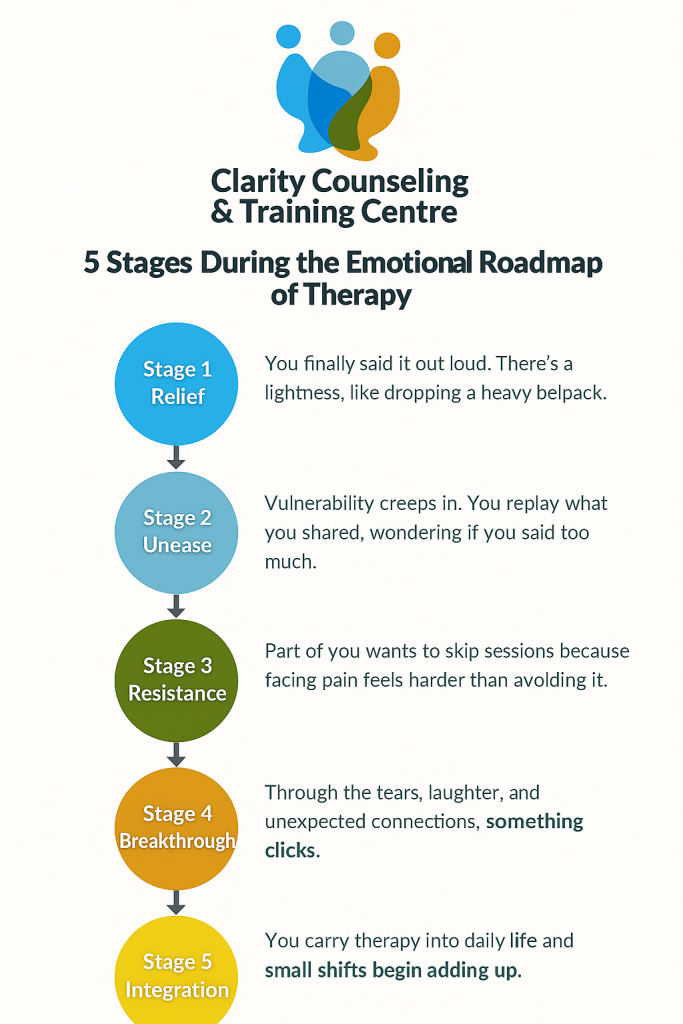
Stage 1: Relief
You finally said it out loud. There’s a lightness, like dropping a heavy backpack. For weeks, maybe years, you’ve carried those unspoken words. In one session, the silence breaks, and your body sighs in relief.
Clients often describe sleeping better after the very first therapy session in Kenya. It’s like cracking a window in a stuffy room, suddenly the air shifts, fresher, freer. You didn’t realize how much you’d been holding your breath until now.
Stage 2: Unease
Vulnerability creeps in. You replay what you shared, wondering if you said too much.
It feels like a “vulnerability hangover”, that shaky feeling after being seen more deeply than you planned.
According to a A 2020 qualitative study published in Frontiers in Psychology explored clients’ inner struggles during the initial phase of psychotherapy by videotaping sessions and conducting in-depth interviews. The study found that clients often hold back and struggle to open up due to fears about the:
- Intensity and consequences of negative emotions,
- Feelings of incapacity and bodily stuckness
- Insecurity about their worthiness to share inner experiences
- Concerns about being disloyal to loved ones
These emotional and relational tensions make starting therapy challenging, highlighting the importance for therapists to create a safe, trusting environment that addresses clients’ fears and helps them gradually share their inner experiences openly.
This is the wobble before the stride. Your nervous system is adjusting to a new kind of openness. Like standing on a rope bridge: unsteady at first, but stronger than it looks.
Stage 3: Resistance
Part of you wants to skip sessions because facing pain feels harder than avoiding it. You may even start rationalizing: “I’m busy… maybe I don’t need this after all.” But resistance is rarely about laziness, it’s about fear. It’s the body’s way of saying, “Danger ahead,” even when the only danger is old pain rising up to be released.
Think of it like pulling weeds. The roots are tangled and stubborn. Yanking them hurts. But clearing them is what makes room for growth.
Stage 4: Breakthrough
Through the tears, laughter, and unexpected connections, something clicks. It might happen when you least expect it, like mid-sentence, in a pause, or even after you leave the room. Suddenly the puzzle pieces start to fit together.
Breakthroughs are rarely neat in therapy and they often feel raw, surprising, like turning a corner and suddenly seeing a view you didn’t know was there.
Stage 5: Integration
You carry therapy into daily life and you realise the small shifts begin adding up. You notice yourself reacting differently in an argument, or feeling less drained by your boss’s tone. Progress becomes visible not in giant leaps, but in the quiet moments of everyday resilience.
This is where healing takes root. Not in the session itself, but in how you live the hours that follow. Like planting seeds, you don’t notice the growth every day, but one morning the green shoots surprise you.
Why Therapy Sometimes Feels Worse Before It Feels Better
Therapy in Kenya digs where you’ve carefully avoided. Old hurts resurface. You might cry more, feel raw, or even feel angry at your therapist. But those feelings aren’t setbacks. They’re signals that healing is underway.
Just like muscles ache after the first workout, your emotions ache when long-stored pain starts loosening. For example, someone leaves therapy and sits in their car, sobbing. They wonder, “Am I broken?” But the next morning, they notice, breathing feels lighter. That’s progress disguised as pain.
An APA review found that temporary increases in distress during therapy often predict deeper long-term improvement. In other words, feeling worse can be the first evidence you’re getting better.
The Myth of the “Perfect Session”
Not every session feels like a revelation. In fact, some feel flat while others feel stormy. Think of therapy like the ocean: some waves are small, others crash hard. Both move the tide forward.
Expect ups and downs. The “boring” sessions matter as much as the breakthroughs. The most uncomfortable sessions matter as much as the easiest of sessions. They lay the ground for deeper change. In fact, therapists often note that the sessions where clients say “I don’t know what to talk about” are where the most authentic breakthroughs begin.
Why Resistance Shows Up (and What It Really Means)
You’ll be tempted to cancel. Or you’ll walk into the room and suddenly “forget” what you wanted to say. The good news is resistance isn’t failure, it’s your brain protecting itself. But here’s the secret: resistance is often the doorway. The very thing you don’t want to talk about is usually the thing that needs healing most.
Research in Clinical Psychology Review shows that client resistance often signals unresolved trauma or avoidance patterns. Leaning into it, rather than running, can unlock transformation.
The Therapy Hangover: Is It Real?
Yes. You may feel drained, heavy, or foggy after a session. Some call it an emotional hangover.
It’s your nervous system processing. Imagine stirring muddy water, often the water clouds before it clears. The same happens inside you.
Tip: Build a soft landing after sessions. Take a walk. Journal. Listen to calming music. Give your emotions room to settle. Studies show therapy can temporarily intensify negative emotions before reducing them long-term.
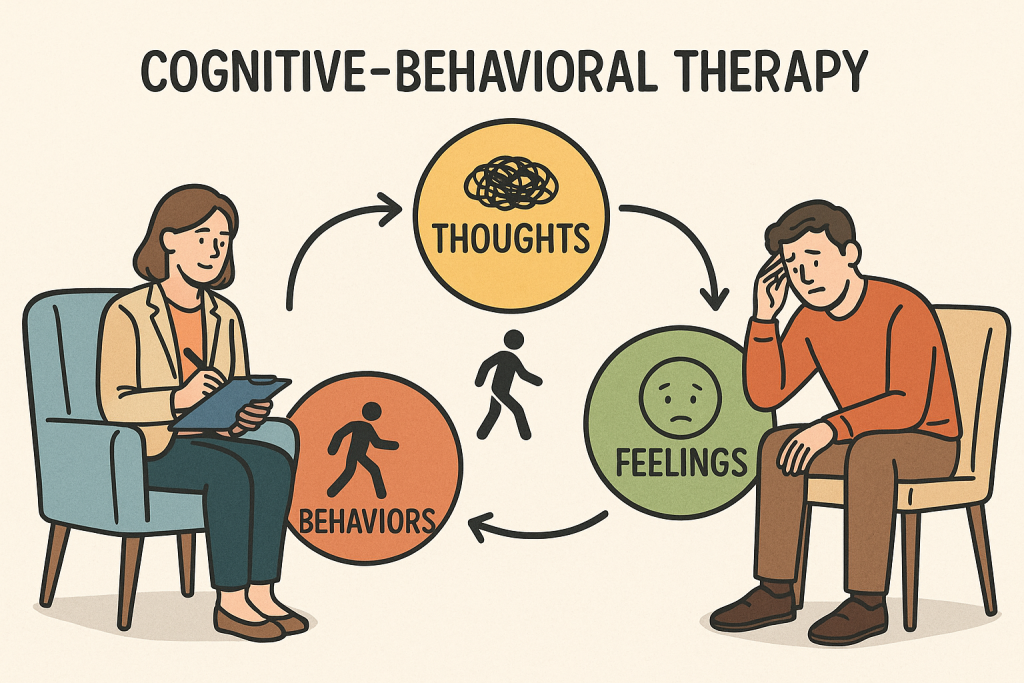
Cognitive-behavioral therapy (CBT) trials report that short-term distress predicts long-term success. Emotional discomfort isn’t a side effect —it’s part of the mechanism of change as discussed in the Journal of Consulting and Clinical Psychology, APA.
Unexpected Emotions: Laughter, Relief, Even Joy
Therapy isn’t all heaviness. Sometimes, you’ll laugh at patterns you never noticed. Or feel a sudden wash of relief, like unclenching a fist you didn’t realize was tight. These lighter moments aren’t distractions. They’re signs your brain is finding new ways to breathe.
Clients often remember these sparks —moments of joy in the midst of struggle— as turning points.
How Long Until You Start Feeling Better?
There’s no fixed timeline. Some people notice shifts within weeks; others take months.
Progress looks like:
- Arguing less with your partner.
- Feeling less dread on Sunday nights.
- Sleeping more soundly.
- Feeling peaceful where anxiety reigned.
Small shifts add up because therapy works like the layers of an onion where you peel one, then another. But for context, a meta-analysis in World Psychiatry shows that most clients begin experiencing measurable improvements between 6–12 sessions. But the depth and pace of healing vary.
FAQs About Emotional Therapy Experiences
Will therapy make me cry?
Often, yes. Tears release what words can’t.
What if I don’t feel emotional at all?
That’s okay. Numbness is an emotion too. Your therapist will help you explore it safely.
Can therapy make me feel worse?
Temporarily, yes. But that usually means you’re touching something important.
When will I feel better?
Most people start noticing meaningful changes after 6–12 sessions, though it varies.
What if I feel angry at my therapist?
That’s normal. Those feelings often mirror patterns in other relationships—and working through them can be transformative.
The emotional ups and downs of therapy don’t mean you’re failing. They mean you’re moving and healing is rarely linear. It’s more like climbing a winding path, you’ll sweat, stumble, and sometimes want to turn back. But each step upward expands your view and you don’t have to climb it alone.
Ready to Take the First Step for Therapy in Kenya?
If you’ve been holding back because you’re afraid of what therapy might stir up, know that the very emotions you fear are often the ones that will set you free. At Clarity Counseling, our therapists walk with you through every stage from the messy, the raw, to the relieving.
So you can not just survive the climb, but discover who you are at the top.
Book your first session today.
Remember that house you moved into at the start? The one full of promise but also clutter and dust? Therapy in Kenya is like unpacking it, box by box. At first, it feels chaotic, piles everywhere, things you’d rather shove back into storage.
But slowly, order takes shape. The rooms begin to feel like yours. Light streams in where it once felt heavy. And one day, without even noticing the exact moment, you realize you’re home.